Petrol vs Hybrid vs EV: Which Car Should You Buy in India in 2026?
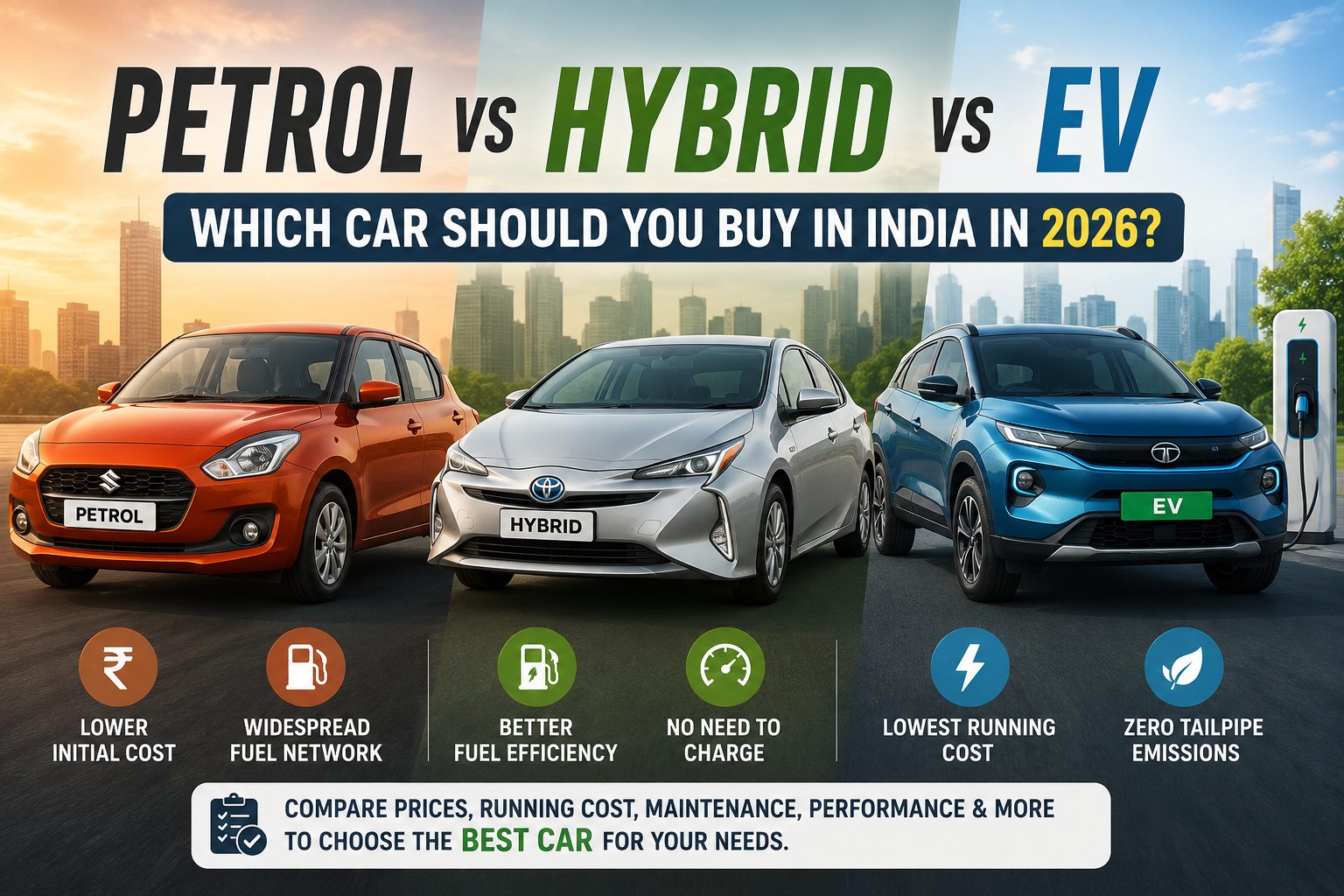
Choosing between a petrol car, hybrid car, or electric vehicle (EV) has become one of the biggest decisions for car buyers in India in 2026. With rising fuel prices, improved EV charging infrastructure, stricter emission norms, and more hybrid and electric models entering the market, choosing the right powertrain is no longer straightforward. While petrol cars remain the most affordable to buy, hybrid cars offer better fuel efficiency, and electric cars promise the lowest running costs. So, the question is: Petrol vs Hybrid vs EV, which car should you buy in India in 2026?
The answer depends on your budaget, annual mileage, driving habits, and access to charging facilities. In this Petrol vs Hybrid vs EV comparison, we'll compare all three options based on purchase price, running cost, maintenance, performance, city and highway driving, environmental impact, and long-term ownership costs. Whether you're buying your first car or planning an upgrade, this guide will help you choose the best car for your needs and make an informed decision in 2026.
Petrol vs Hybrid vs EV: At a Glance
| Feature | Petrol Car | Hybrid Car | Electric Vehicle (EV) |
| Initial Purchase Price |
Lowest |
Higher | Usually Highest |
| Running Cost | High | Medium | Lowest |
| Maintenance Cost | Moderate | Moderate | Lowest |
| Fuel Efficiency | Average | Excellent | Not Applicable |
| Refuelling/Charging Time | 5 Minutes | 5 Minutes | 30 Minutes to 8 Hours |
| Long-Distance Travel | Excellent | Excellent | Good with Charging Stops |
| Best for City Driving | Good | Very Good | Excellent |
| Tailpipe Emissions | High | Lower | Zero |
| Government Incentives | None | Limited | Available in Some States |
Petrol vs Hybrid vs EV: Which One Performs Better?
There isn't a single powertrain that's perfect for everyone. The right choice depends on your budget, driving habits, annual mileage, and access to charging infrastructure. To make your decision easier, let's compare petrol, hybrid, and electric cars across the factors that matter most.
1. Purchase Price
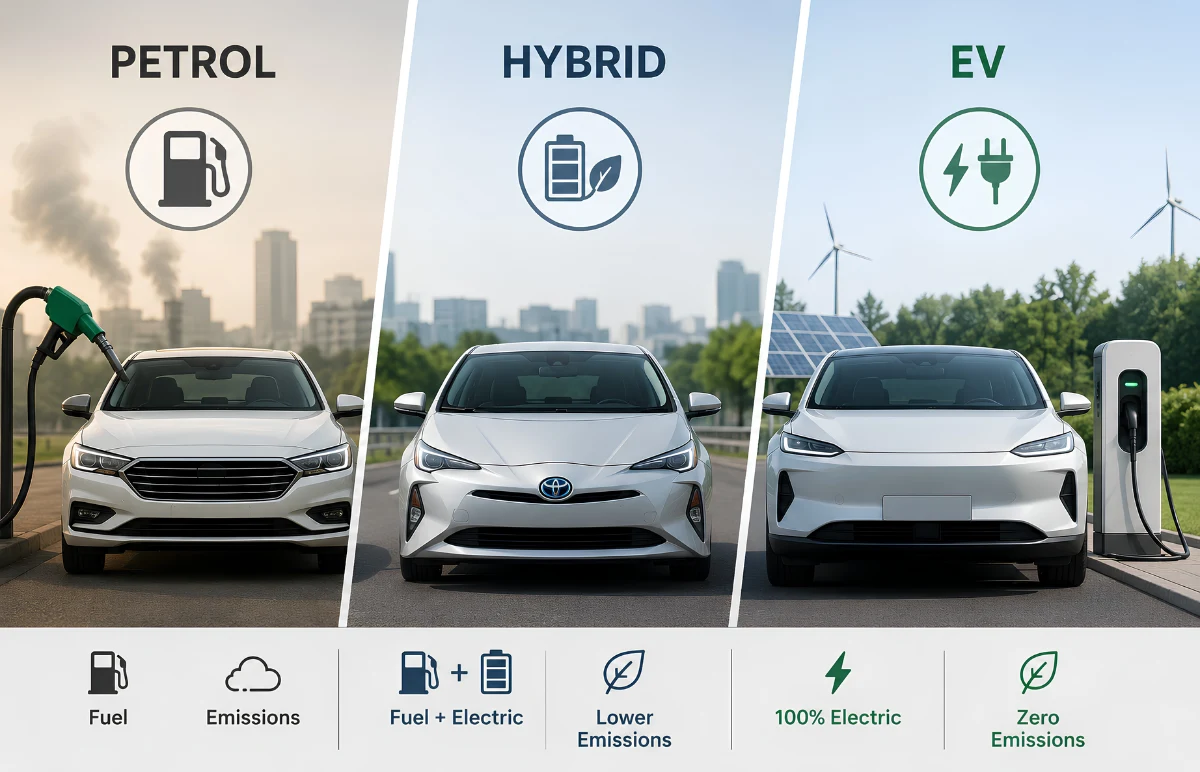
- Petrol: Petrol cars are the most affordable to buy. Whether you're looking at a hatchback, sedan, or SUV, the petrol variant is usually the least expensive. This makes petrol cars a practical choice for first-time buyers or anyone with a limited budget.
- Hybrid: ybrid cars cost more because they combine a petrol engine with an electric motor and a battery pack. Depending on the model, a hybrid variant can cost ₹2-5 lakh more than the equivalent petrol version. However, this higher price is partly offset by lower fuel expenses over time.
- EV: Electric vehicles generally have the highest upfront price due to the cost of the battery pack. However, EV prices have become more competitive in recent years, and some states continue to offer benefits such as road tax exemptions and registration fee waivers, making ownership more affordable.
Verdict: If your priority is the lowest purchase price, a petrol car remains the best option.
2. Running Cost
- Petrol: Petrol cars have the highest running cost because of rising fuel prices. Depending on the vehicle, the running cost is typically around ₹5–6 per kilometre, making them less economical for people who drive long distances every year.
- Hybrid: Hybrid vehicles consume significantly less fuel by using the electric motor during low-speed driving and heavy traffic. Their running cost is generally around ₹3–4 per kilometre, making them a great middle ground between petrol and EVs.
- EV: Electric vehicles are the cheapest to run. Charging at home costs far less than buying petrol, and the average running cost is around ₹1–2 per kilometre, depending on electricity tariffs and the vehicle's efficiency.
Verdict: For daily commuters and high-mileage users, EVs offer the lowest running cost, followed by hybrids.
3. Maintenance Cost
- Petrol: Petrol cars require regular servicing that includes engine oil changes, air and oil filter replacements, spark plugs, coolant checks, and other routine maintenance. Over the years, these costs add up.
- Hybrid: Hybrid cars require maintenance similar to petrol vehicles because they still have an engine. However, regenerative braking reduces brake wear, and modern hybrid batteries are designed to last for many years without needing replacement.
- EV: EVs have far fewer moving parts than petrol or hybrid cars. They don't require engine oil changes, spark plug replacements, or clutch servicing. Routine maintenance is mainly limited to tyres, brakes, suspension, and software updates.
Verdict: Electric vehicles are the least expensive to maintain over the long term.
4. Performance and Driving Experience
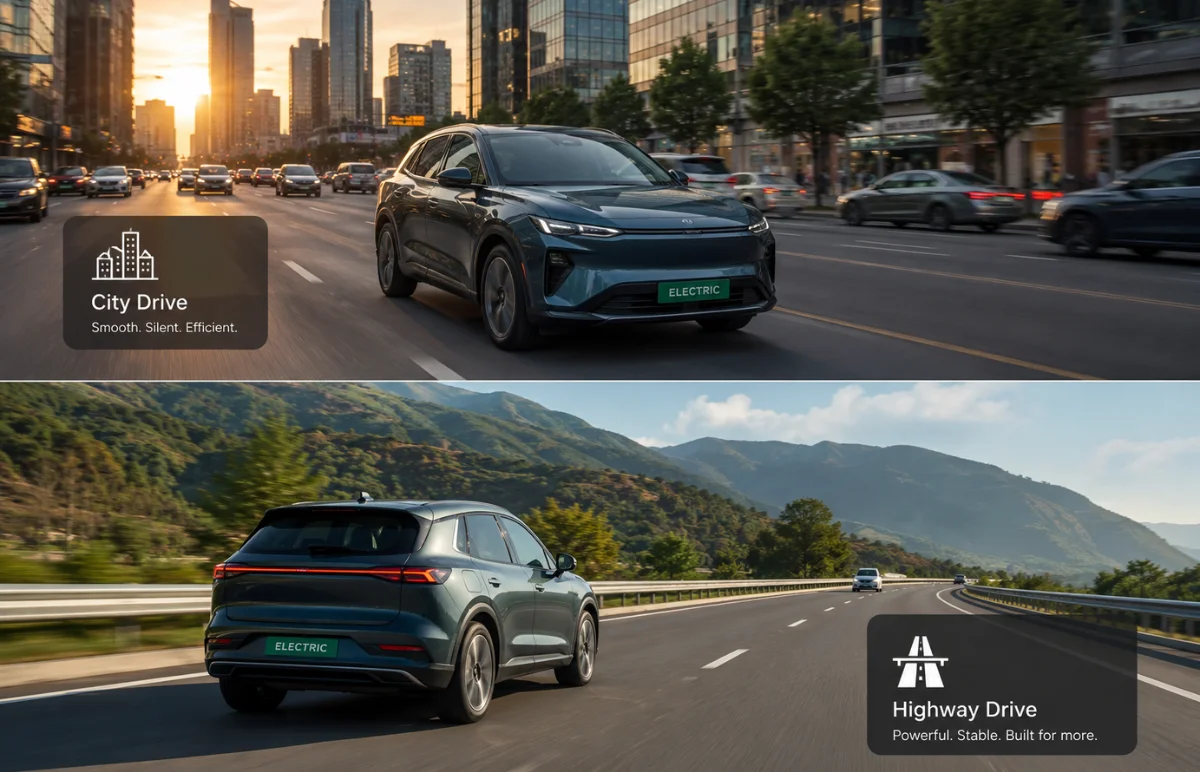
- Petrol: Petrol cars provide a familiar driving experience with smooth engine performance and quick refuelling. They are available in a wide range of power outputs, making them suitable for both city and highway driving.
- Hybrid: Hybrids offer a quieter and more refined experience, especially in city traffic. The electric motor assists during acceleration, while the petrol engine takes over when more power is needed. The transition between the two is usually seamless.
- EV: Electric cars deliver instant torque, meaning they accelerate quickly from a standstill. With no engine noise or gear shifts, EVs provide the smoothest and quietest driving experience, particularly in urban traffic.
Verdict: For driving comfort and instant acceleration, EVs lead the way, while hybrids offer the best balance between performance and efficiency.
5. City and Highway Driving
- Petrol: Petrol cars perform well in both city and highway conditions but consume more fuel in heavy traffic because the engine continues to idle.
- Hybrid: Hybrids are ideal for mixed driving. They save fuel in city traffic using the electric motor while still offering the convenience of a petrol engine for long highway journeys without worrying about charging.
- EV: Electric vehicles are at their best in cities. Stop-and-go traffic allows regenerative braking to recover energy, improving efficiency. On highways, modern EVs offer impressive range, but long trips still require planning around charging stations.
Verdict: Choose an EV if most of your driving is within the city. For frequent highway trips, a hybrid is currently the more practical option.
6. Convenience
- Petrol: Petrol cars are the easiest to live with. Refuelling takes only a few minutes, and petrol pumps are available almost everywhere in India.
- Hybrid: Hybrids offer the same convenience as petrol cars because they never need external charging. The battery charges automatically while driving and through regenerative braking.
- EV: EV owners benefit from charging at home overnight, eliminating regular visits to fuel stations. However, public charging infrastructure, although expanding rapidly, is still not as widespread as petrol pumps. Long-distance travel may require charging stops.
Verdict: Petrol and hybrid cars are more convenient for buyers who frequently travel long distances, while EVs are highly convenient for those with home charging.
7. Environmental Impact
- Petrol: Petrol cars produce the highest tailpipe emissions and rely entirely on fossil fuels. Although modern BS6 engines are much cleaner than older vehicles, they still contribute significantly to air pollution and carbon emissions.
- Hybrid: Hybrid cars reduce fuel consumption and emit fewer pollutants than petrol vehicles by using electric assistance during driving. They offer a good balance between efficiency and environmental performance.
- EV: Electric vehicles produce zero tailpipe emissions, making them the cleanest option on the road. As India's electricity grid increasingly incorporates renewable energy, the environmental benefits of EVs are expected to improve even further.
Verdict: If reducing your environmental impact is a priority, an EV is the clear winner, followed by a hybrid.
Which Car Should You Buy Based on Your Usage?
The best car isn't necessarily the most advanced, it's the one that matches your daily driving habits and budget. Here's a quick guide to help you decide.
| Your Usage | Best Choice |
| Budget under ₹10 lakh | Petrol |
| Drive less than 10,000 km/year | Petrol |
| Daily city commuting (40–60 km) | EV |
| Drive more than 15,000 km/year | EV |
| Frequent highway trips | Hybrid |
| Need one car for both city & highway | Hybrid |
| No home charging facility | Petrol or Hybrid |
| Lowest long-term ownership cost | EV |
Bottom line: Choose a petrol car for affordability, a hybrid for all-round practicality, and an EV for the lowest running costs and daily city driving. Matching your vehicle to your usage will ensure the best value over the years.
Pros and Cons of Petrol, Hybrid and Electric Cars
Every powertrain has its own advantages and drawbacks. Understanding these can help you choose the right car based on your budget, driving habits, and long-term ownership goals.
| Petrol Cars | Hybrid Cars | Electric Vehicles (EVs) |
| Pros | Pros | Pros |
| Lowest purchase price | Excellent fuel efficiency | Lowest running cost |
| Easy and quick refuelling | No need for external charging | Very low maintenance |
| Wide range of models available | Ideal for both city and highway driving | Zero tailpipe emissions |
| Extensive service and fuel station network | Better mileage than petrol cars | Smooth, silent, and quick acceleration |
| Cons | Cons | Cons |
| Higher fuel expenses | Higher upfront cost than petrol cars | Higher purchase price than petrol cars |
| More engine maintenance | Fewer models available in India | Charging takes longer than refuelling |
| Highest emissions among the three | Maintenance can be slightly costlier than petrol | Public charging infrastructure is still expanding |
| Fuel prices can significantly increase ownership costs | Limited government incentives | Long highway trips require charging planning |
Final Verdict
There is no single winner in the Petrol vs Hybrid vs EV debate because the best choice depends entirely on how you use your car. A petrol car is the right option if you have a limited budget, drive occasionally, or cover less than 10,000 km per year. It offers the lowest purchase price, quick refuelling, and the widest range of vehicle choices. However, higher fuel prices and regular engine maintenance make it more expensive to own over the long term.
A hybrid car is the perfect middle ground. It combines the convenience of a petrol car with significantly better fuel efficiency, making it ideal for buyers who frequently drive in both city traffic and on highways. If you want lower fuel bills without worrying about charging stations, a hybrid is an excellent investment. An electric vehicle (EV) is the best choice for buyers who drive long distances every year, primarily commute within the city, and have access to home or workplace charging.
While the initial purchase price is higher, the savings on fuel and maintenance can make EVs the most economical option over the vehicle's lifetime. Before making your decision, calculate your annual mileage, consider your charging options, and compare the total ownership cost rather than focusing only on the purchase price.
.webp)