Solar-Powered EVs: The Next Step in Electric Mobility?
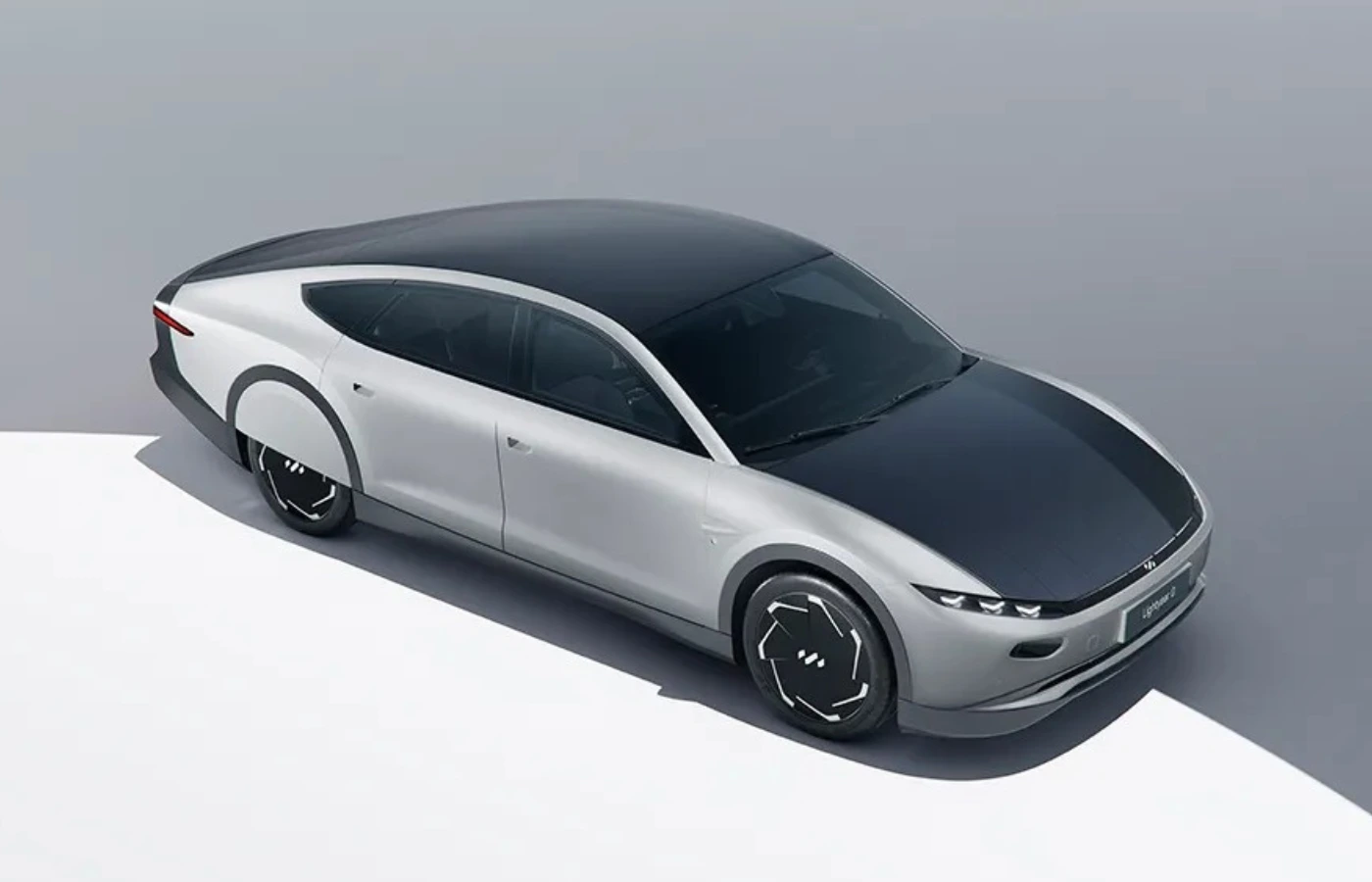
Solar-Powered EVs are generating a huge interest and hype on the internet as the next big innovation of electric mobility where self-charging cars which can self-charge themselves automatically and users don’t have to go to charging stations. But what’s the reality behind this technology? Let’s understand solar-powered EVs in detail.
What are Solar-Powered EVs
Let’s understand how solar-powered cars work and what Solar EV and its types are.
On-Car Solar Panels: The cars which have solar cells on the bonnet and roof. What they do is charge the battery continually at a constant speed.
EV charged by Solar at Home/Office: If your house or office is installed with a normal solar plant then it directly gives power from the grid to home charger. This ensures that EVs are getting charged indirectly through solar technology.
Thus both of these concepts are totally different in approach. The On-Car Solar panels do bonus charging, while the Rooftop Solar charging is a complete replacement of traditional chargers.
.webp)
Solar-Powered EVs: How much Sunlight & Power is Generated?
Let’s understand this approach with a practical example. The average solar energy generated in India is around 4-8 kWh per square meter, which is also dependent on the location and climatic conditions. Let’s simplify it.
This is enough energy generated in one square meter to run a standard ceiling fan for the duration of 60-80 hours.
Car as a Solar Panel: The car comes with a limited space and in order to generate more energy, we prioritise “Solar First” designs where cells are attached to the roof, bonnet and trunk of the car.
- Effective Area: We are assuming a surface area of 4 m² (Around the size of a king-size bed).
- The Efficiency: Solar panels cannot absorb 100% of the sunlight. The current technology is only capable of capturing 20% of the energy that is hitting it.
.webp)
The Calculation: Let’s do simple maths for a perfect sunny day in India. We will be using this formula to calculate the usable battery energy.
Total Sunlight * Panel Efficiency = Usable Battery Energy
- Total Sunlight Hitting Car: 4 m² * 6 kWh/m² = 24 kWh/Day
- Conversion to Electricity (20%): 24 kWh * 0.20 = 4.8 kWh/Day
Thus on a perfect day, the sun will generate 4.8 kWh of free fuel.
Converting Energy to Km: Now, we will be converting the sun’s electrical energy into driving distance.
- The Car's Range: A highly efficient Electric Vehicle (EV) consumes about 0.15 kWh to cover 1 kilometer.
The Theoretical Range: 4.8 kWh (Generated) / 0.15 kWh/ km (Consumed) = 32 Km of Range
Thus on a perfect sunny day, the sun alone can provide users around 30-32 km of driving per day. For many urban commuters it is more than enough.
.webp)
Theory Vs Indian Roads: 32 Km of range does sound good but the real world also comes with various hindering factors. These can be
- The sun moves and the car’s roof is flat and the angle sometimes is rarely perfect.
- Parking under trees and tall buildings or an overcast cloudy weather.
- Dust is a big factor in countries like India which covers the panels and heat ultimately affects the panel efficiency.
Thus after taking these factors into consideration, solar-powered EVs will be able to provide 10 km of range per day which just adds 3,650 Km of free driving every year, purely from parking your car in direct sunlight.
Real-World Examples (Global)
Globally, there are various examples such as the Hyundai Ioniq 5, which comes with a solar roof and the company claims that the Solar roof provides an additional 2,000 Km of extra range which is completely free.
This adds to a 5-6 Km of extra range per day only in the scenario if these cars are running in sunny countries. So if you have a daily office commute of 20-30 Km, then a solar roof will cover all of your routine commutes, thus increasing your car’s efficiency to a next level.
.webp)
Hyundai Sonata Hybrid (Early Solar Roof): The company claims that if constant sunlight of 6 hours is provided, then it could generate 1,300 Km of extra range, that roughly adds 3-4 Km per day. However, if we carefully analyse, then it's more of a bonus than a primary fuel.
Toyota Prius Plug-In / Prime Solar Roof: Toyota has also provided an option of solar roof. As per Toyota’s second-gen system, the solar roof adds 1,200 Km of range per year by engaging its BEV mode which adds a total of 3 Km per day in ideal conditions.
PROS of Solar Panels on EV Body
- Users get an extra top up of free range generated by a renewable energy resource. Even if it provides 3-6 km/day (Hyundai Ioniq 5 / Sonata / Prius examples) then it can generate 10,000 - 20,000 km of free energy.
- It also provides off-grid convenience as if you are staying in a remote area devoid of any charging infrastructure, then you can simply charge your car via solar roof by parking your car in direct sunlight.
.webp)
- Solar Panel also promotes green branding and awareness as OEMs can promote their EVs by using engaging headlines like “A car that charges itself” which will further connect the majority of customers with renewable energy.
- This technology is quite useful for special vehicles like Aptera and lightweight super efficient cars or solar e-rikshaws, where it perfectly matches with its use case.
CONS of Solar Panels on EV
- There is a surface area limit as cars have a limited area, and if you are considering a typical SUV/EV with a consumption of 180-200 kWh/Km, then it will automatically reduce the Km generated by solar energy.
- In India many people park their cars in the basement and have specific covered parking, thus it is not possible to generate frequent solar energy as it requires an ideal 8 hours of full sun contact, which is quite rare.
.webp)
- In India the cars are in constant exposure to dust and weather changes which can reduce the output by 5-20%.
- The solar roof commands a premium of Rs 80,000 - Rs 2,00,000 and in return you only get limited Km per day which increases the payback period specifically in passenger cars.
- It’s not a replacement for charging infrastructure as it cannot replace the home charger as long highway trips and frequent commutes are only possible by traditional charging methods.
- It adds weight and complexity which increases the maintenance costs.
.webp)
Practical Advice for EV Buyers
If you are buying an EV for city driving and highway trips?
- It is very important to understand that on-car solar panels are not a replacement but an alternative bonus feature and in future if EVs are available with Solar roof then there are some important questions which u can ask the company.
- What’s the official claims of OEMs - How many Km per year?
- Is it realistic according to India’s extreme climatic conditions?
- What’s the additional cost and fuel savings?
.webp)
What’s the most practical “Solar EV”?
- One of the most realistic and financially viable solar EV setups are mentioned below.
- Install proper rooftop solar plant at Home/Office
- Connect the Home charger and generate power through the solar plant (Direct or net-metering via Grid).
- Solar Plant requires more area and capacity (3 kW, 5 kW, 10 kW)
- Users can convert 60-80% of yearly driving into effectively solar-powered driving, if you have the dedicated parking and charger.
Thus this strategy is proven technically and financially and India already has the majority of rooftop solar systems installed.
.webp)
The Final Conclusion: Solar Powered EVs are realistic or just Hype?
Through thorough research and our own understanding, passenger cars with limited solar roofs are technically an advanced innovation but practically have a limited result. Yes, achieving 2-6 km/day of added range is realistic (Hyundai Ioniq 5, Prius) but understanding these cars as self-charging cars is just a marketing hype used by companies to promote their new cars and technologies.
Ultra-efficient dedicated solar cars like Aptera, Lightyear, and Sion are quite impressive as they are adding 30-70 km/day which makes a huge difference but business viability is uncertain for these cars as customers need advanced technology and infrastructure to support these cars.
.webp)
So solar-powered cars are not just a hype, however it is not a primary fuel for passenger cars but more likely a smart supportive technology. So those people who are keeping their expectations realistic with solar-powered cars can see this technology as a renewable energy source providing 2-5 km of additional range.