Top 10 EV Myths Explained (2026): The Truth About 60kWh Batteries, Fast Charging & More
The first time EV buyers are always aroused to various myths and curiosities while making their decisions. However, due to less information on EVs, many users come with their own preconceived myths surrounding EVs and are hesitant to adopt EVs due to these wrong misconceptions.
We at AllAboutEVs have searched extensively and listed common EV myths and misconceptions and have answered them in detail about the truth of these myths which are nothing more than false rumors hampering the decision of many EV buyers.
MYTH 1
A 60 kWh battery is only good for city driving
These myths have aroused only due to witnessing battery size in isolation as the reality is that battery capacity is very important, but highway driving is not only dependent on kWh. It is based on different factors such as efficiency, terrain, speed, aerodynamics, weather, payload, and charging access..webp) According to various reports, EVs are more efficient in city driving as compared to highways due to frequent usage of regenerative braking, while in the highways, more energy is required to do an overtake. Energy.gov has also stated that more energy is consumed during maintaining highway speeds.
According to various reports, EVs are more efficient in city driving as compared to highways due to frequent usage of regenerative braking, while in the highways, more energy is required to do an overtake. Energy.gov has also stated that more energy is consumed during maintaining highway speeds.
However, that does not mean a 60 kWh battery is useless as if the car’s overall energy consumption is good and users have done a proper route planning, then 60 kWh pack is useful for both highway as well as intercity.
MYTH 2
A bigger battery automatically means a better EV
This is also a most common myth as a bigger battery pack surely gives you more energy, but that doesn’t mean it is a better car and will provide better efficiency. The bigger battery pack will utilise more energy, higher cost, and more weight, which could further lead to unnecessary overkill of the batteries in a longer period of time.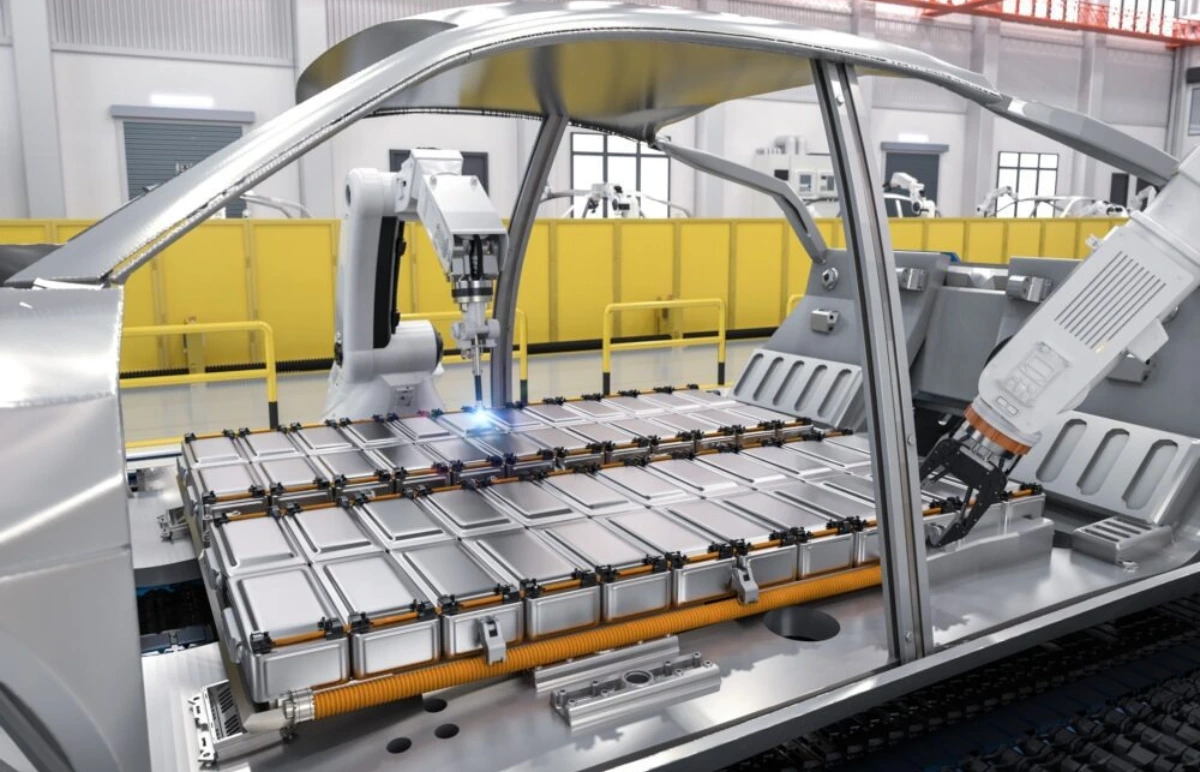
Practical Example: If a buyer is using his EV 90% in the city and weekend trips of around 150 km, then 45-60 kWh battery powered EVs can be ideal for him as compared to the overexpensive long-range battery packs, as bigger batteries are only ideal if they justify your use case, otherwise you are paying extra cost, which is not justified.
MYTH 3
Fast charging destroys the battery, so DC charging should be avoided completely.
According to the latest Geotab Analysis, measured on the datasets of 22,700 EVs, which shows that rapid DC charging leads to faster battery degradation especially when you are doing frequent DC charging. Their data shows the low DCFC frequency’s average degradation up to 1.5% per year.
On the other hand, high-power DC charging leads to around 3% per year. However the same study also shows that modern EV batteries are robust with a significant average degradation rate of around 2.3% per year. In reality, DC fast charging does not destroy but increases stress..webp)
MYTH 4
Charging to 100% is always bad for every EV.
This myth is absolutely true as according to Geotab’s 2026 battery health study, degradation of batteries happens at a rapid rate when the battery SOC is nearly empty or full every time. The conclusion is that never charge your EVs batteries to 100% SOC.
The role of battery chemistry plays an important role as energy density of LFP packs is always lower than NMC. However LFP has a potential advantage that it can be charged to 100% SOC when it is required as full charging degradation is more common in NMC packs, but NMC packs are designed to offer more long-term battery performance and reliability.
Thus it’s a simple rule to only charge your battery to 100% SOC, when it’s required.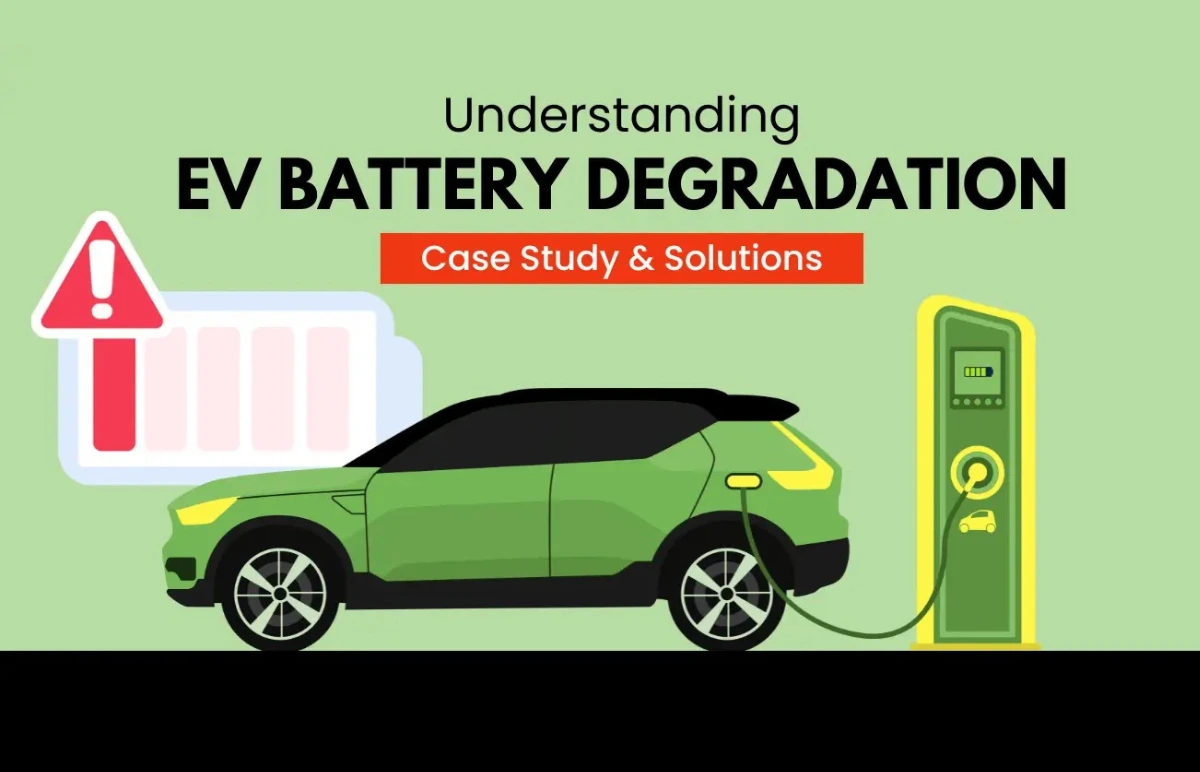
MYTH 5
Thermal management doesn’t matter much; all EV batteries age roughly the same.
This is a very important myth as climate and charging conditions affect battery health at a massive rate. Hot climates significantly reduce battery life and there is more stress on high power charging which increases the temperature of batteries. Thus a vehicle’s battery is dependent on the model and its battery chemistry choices and unique battery management system configurations.
In other words, for a proper battery life, design and cooling matters the most along with optimum thermal management.
MYTH 6
Regenerative braking always works the same way, in every condition.
This is not true as according to Tesla’s owner manual, regenerative braking may be limited especially when the battery is cold or at 100% SOC. It also says deceleration of regenerative braking also depends on the current battery percentage, which just ensures that regen behavior is not fixed and changes with battery condition..webp)
MYTH 7
Cold weather only affects ICE cars; EV range drop is mostly hype.
This is totally a myth as according to FuelEconomy.gov’s cold weather data, the fuel economy can further drop to 39% in mixed driving and around 41% drop can be expected at 20 Degree with about two-third of extra energy going into the cabin heating.
In context to India’s temperatures, in the areas of North India, hill-station trips and cold morning starts, significant heater usage will affect EV efficiency. The answer to the myth is that cold impact is real and depends on temperature, trip length, heating demand, and vehicle’s thermal system..webp)
MYTH 8
An EV with home charging is easy, so public charging quality doesn’t matter.
This myth can be severe for India as according to the 2025 analysis of IEA, home charging is the most popular way of charging adopted by EV owners. But some reports put emphasis on mass installation of public chargers. According to IEA’s infrastructure work, charging services should be more accessible and convenient to use and at the same time should be reliable and economical.
Even if you have a good home charging setup installed at home, public charging is still need of the hour specifically for long road trips and for your flexibility if you move or your charging situation changes..webp)
MYTH 9
LFP battery means worse, and NMC battery means premium and better.
This myth is quite common because EV buyers are prioritising quality on the basis of buyers' chemistry. According to 2025 IEA battery analysis, LFP batteries are around 30% cheaper per kWh than NMC batteries. In the case of NMC batteries, they have high energy density. IEA also says LFP pack energy density is around one-fifth lower by mass and about one-third lower by volume than NMC packs.
Thus in summary, NMC batteries are more suitable where higher energy density is valuable, whereas LFP suits often where users prefer cost, safety, durability, and full-charge usability matters the most. Thus LFP is not cheap and of bad quality, as LFP is universally most-adopted battery technology.
MYTH 10
Battery chemistry matters less than battery size.
Actually, chemistry can be more important than battery size as chemistry puts a direct emphasis on energy density, cost, thermal behaviour, degradation characteristics, charge behaviour, and how manufacturers are setting charging suggestions.
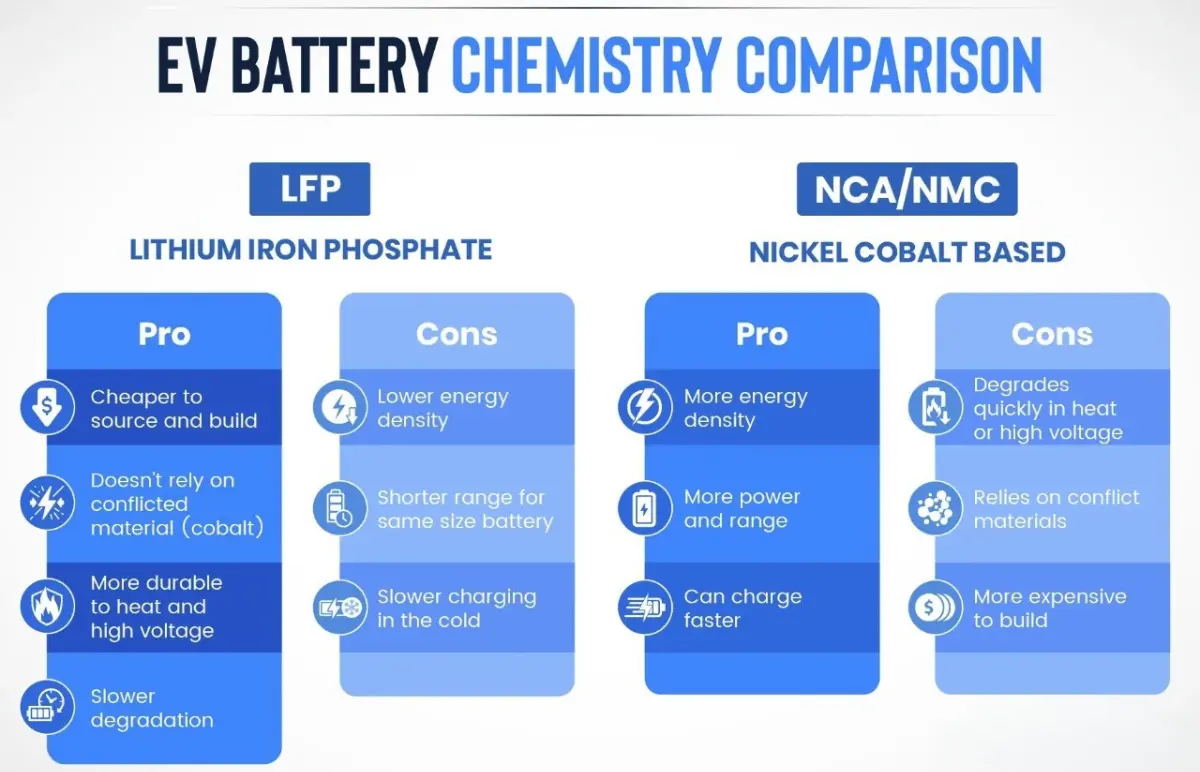
IEA’s 2025 battery analysis states that LFP and NMC directly contrast on cost, energy density, and charging to 100% SOC accessibility. Let's break this with a practical example.
If two EVs have a battery capacity of 60 kWh, that doesn’t mean their ownership experience will be the same as one may lead to lower cost of ownership even after regular SOC use, while others may offer more range in the same battery size. As size reflects “how much energy can be stored in the battery” while chemistry helps to determine how that energy streams over time and under stress.
Thus battery size is the hardware, while battery chemistry is the software.