Honda QC3 Electric Scooter: Range, Battery, Price and Everything You Need to Know
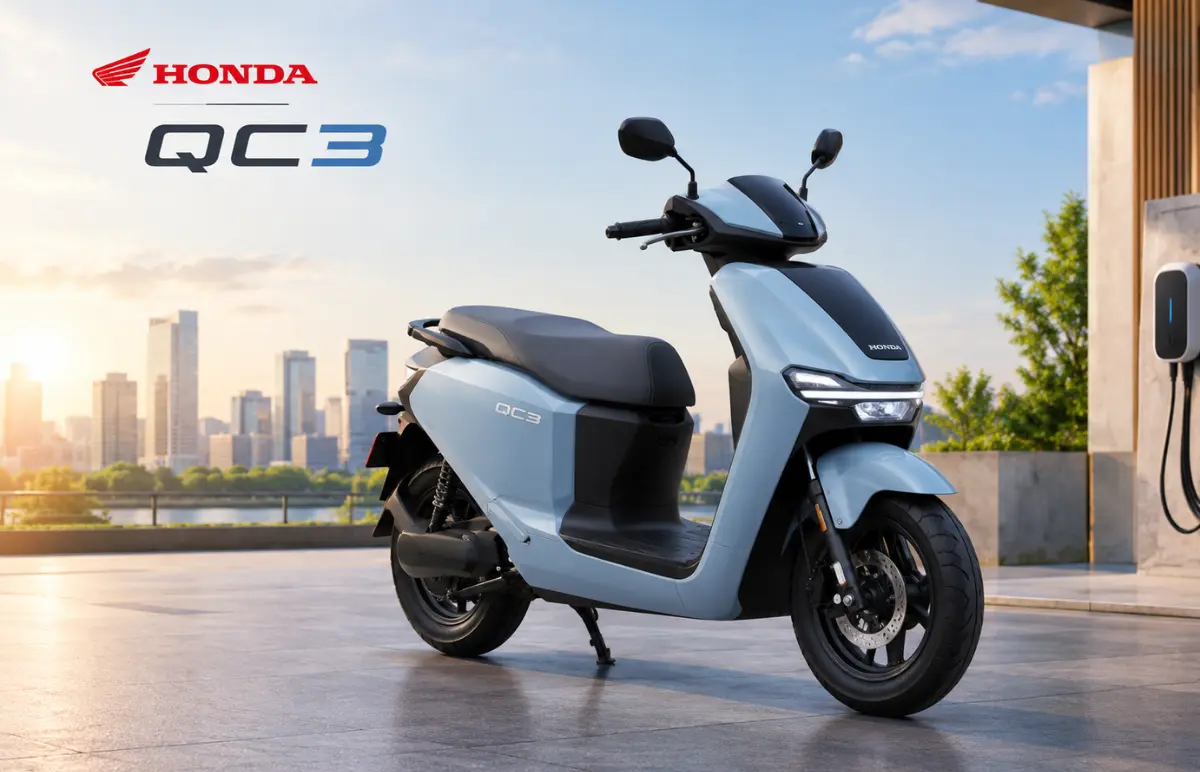
Honda Motorcycle & Scooter India (HMSI) has expanded its electric scooter range with the launch of the Honda QC3 family-focused electric scooter. The QC3 was launched in India on 22nd September 2026. In comparison to the entry-level QC1, the QC3 gets a larger 3 kWh battery, a claimed 145 km IDC range and more storage. Honda has also made it available at an entry-level price, adding the QC3 to their current list of electric two-wheelers in India. In this article we have discussed everything about the Honda QC3 price, range, battery, charging time, features, practicality, availability and other relevant details.
Honda QC3 Specifications at a Glance
| Specification | Honda QC3 |
| Price | ₹1.35 lakh, ex-showroom |
| Battery capacity | 3.0 kWh |
| Claimed IDC range | 145 km |
| 0–80% charging | Around 2 hours 40 minutes |
| 0–100% charging | Around 4 hours |
| Storage | 32 litres |
| Display | 5-inch TFT |
| Connectivity | Honda RoadSync |
| Navigation | Turn-by-turn |
| Motor | Hub-mounted |
| Front brake | Disc |
| Variant | Standard |
| Colours | 4 |
Specifications and availability are based on Honda’s product announcement and the September 2026 launch information.
Honda QC3 Price And Launch Details
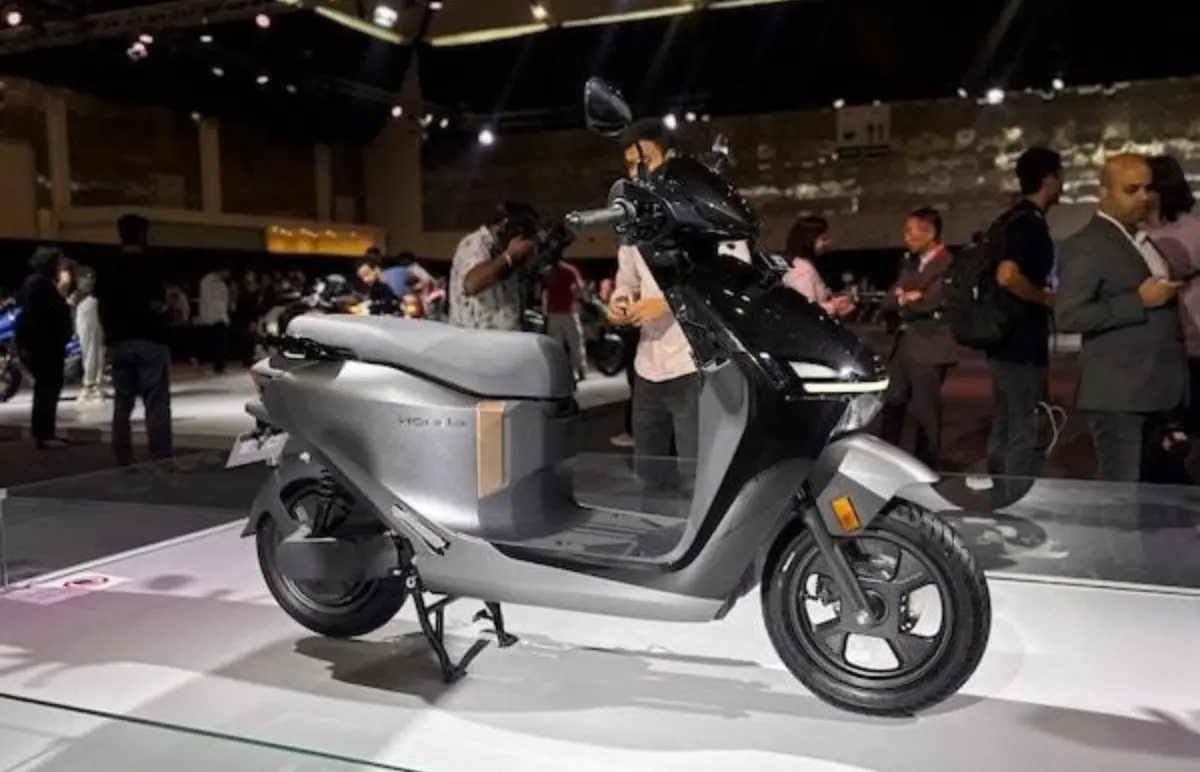
The Honda QC3 price in India is ₹1.35 lakh (ex-showroom, Delhi). It is offered in a single variant at launch. The QC3 is initially being launched in five cities, Delhi, Agra, Cuttack, Surat and Kollam, at select Honda RedWing dealerships. The company is targeting an expansion of QC3 availability in phases.
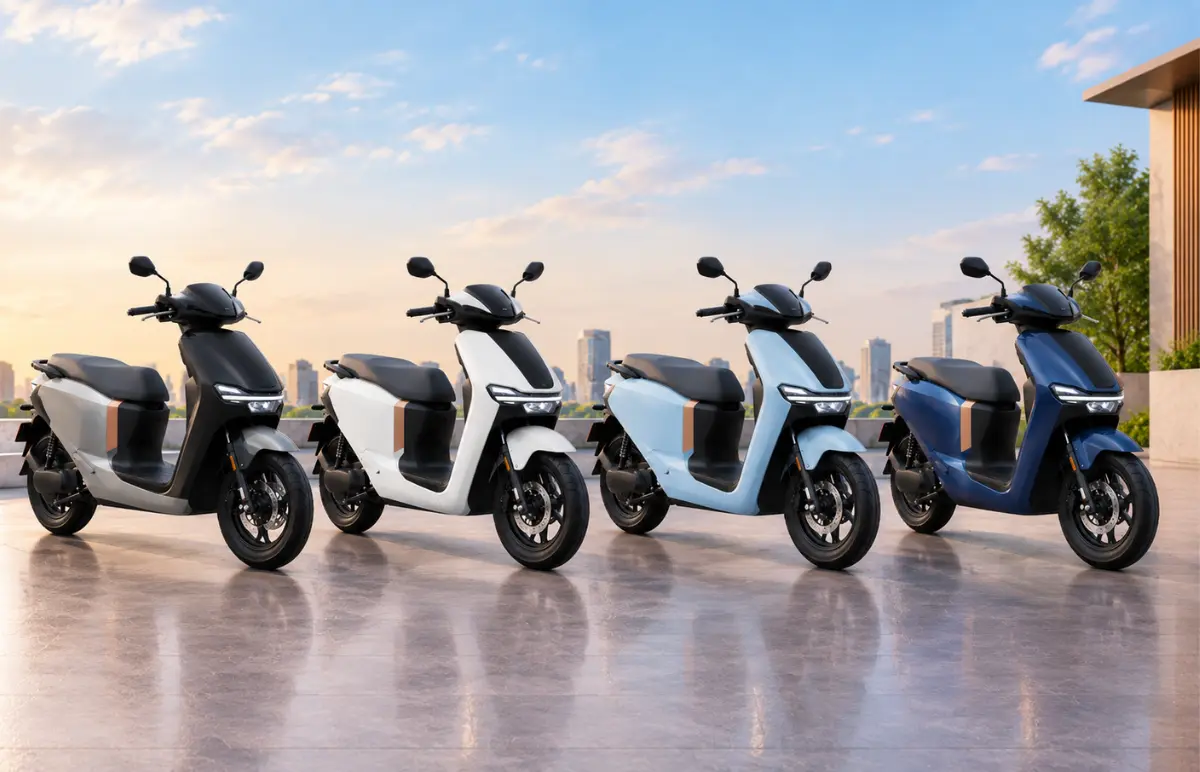
Bookings can be made online via Honda’s website, as well as at participating dealerships with a ₹5,000 booking amount. As the initial rollout of the QC3 is limited, customers not based in the first five cities should double-check local availability before booking the QC3. The QC3 is available in four colours:
- Matt Photon Gray Metallic
- Pearl Precious White
- Pearl Shallow Blue
- Pearl Siren Blue
The ₹1.35 lakh quoted is an ex-showroom Delhi price, the final on-road cost will vary depending on local city taxes and other factors.
Honda QC3 Battery And Range
One of the biggest differences between the QC3 and QC1 is the battery. Whereas the QC1 uses a 1.5 kWh fixed battery, the QC3 has a 3.0 kWh battery, which Honda claims will deliver a 145 km range (IDC). This makes the QC3 the longest-range electric scooter in Honda’s India lineup at launch. However, the 145 km range figure should be taken as a certified test-cycle range. Real-world ranges will be impacted by a variety of factors including rider and pillion weight, driving conditions, temperature, tyre pressure and driving style.
Therefore, buyers are advised not to expect a 145 km range in day-to-day riding conditions. As an everyday city scooter, the QC3’s range should be adequate for most needs. If a rider is travelling 25-30 km a day, they would not need to recharge the QC3 after every short trip. Being a family-oriented EV, the QC3’s longer range is a significant advantage to buyers looking for a vehicle that fulfils multiple needs, from day-to-day commuting to shopping and family excursions.
Also check: Honda UC3 Electric Scooter Patented in India | 122km Range
Charging Time Of The Honda QC3
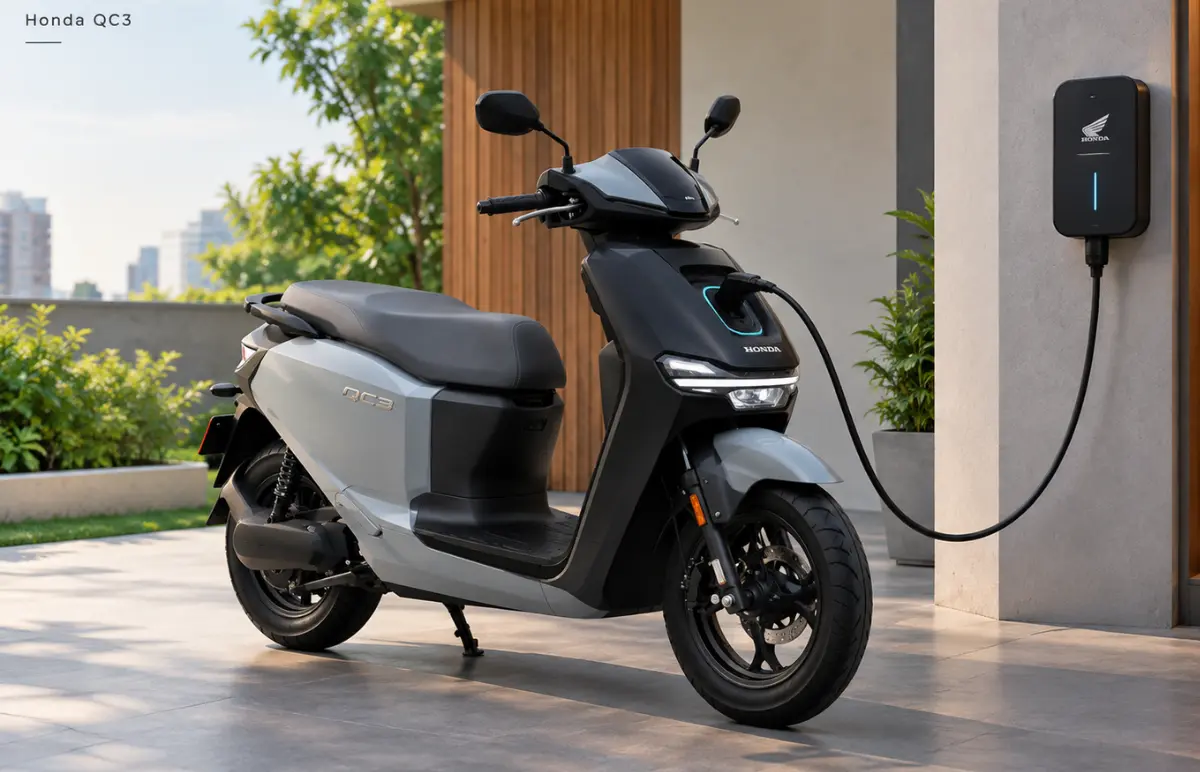
The QC3 has a fixed battery and offers support for charging via a regular charging setup. Honda quotes a time of 2 hours 40 minutes for the battery to charge from 0% to 80%, whereas a full charge would take around 4 hours. With 80% of the battery capacity offering sufficient power for everyday commuting, the QC3’s charging time can be considered to be reasonably quick. Most owners will not find a need to charge the QC3 battery from completely empty to full.
Charging can be completed during a workday or overnight, and should suit a commuter’s daily routine. In terms of infrastructure, Honda’s EV charging information notes that the company’s fixed battery electric vehicles can be charged at a household outlet, whereas dealerships and urban charging locations can offer additional charging options. The QC3’s battery is not based on Honda’s other EV technology, the removable-battery swapping system. Therefore, buyers should look out for a suitable charging point where they normally park the QC3.
Design And Family-Oriented Practicality
The Honda QC3 has been developed with everyday family users in mind, rather than performance riding. As a scooter, it features a step-through design, which is suitable for all-day city commuting. The QC3 offers one of the most useful practical features for a city scooter, 32-litre under-seat storage capacity.
By comparison, the QC1 offers 26 litres of storage capacity. For a family scooter, storage capacity can be as valuable as range, due to the need to carry items such as groceries, and other things. The QC3 features a Smart Key for added convenience when locking and accessing the vehicle.
Honda QC3 Display Features
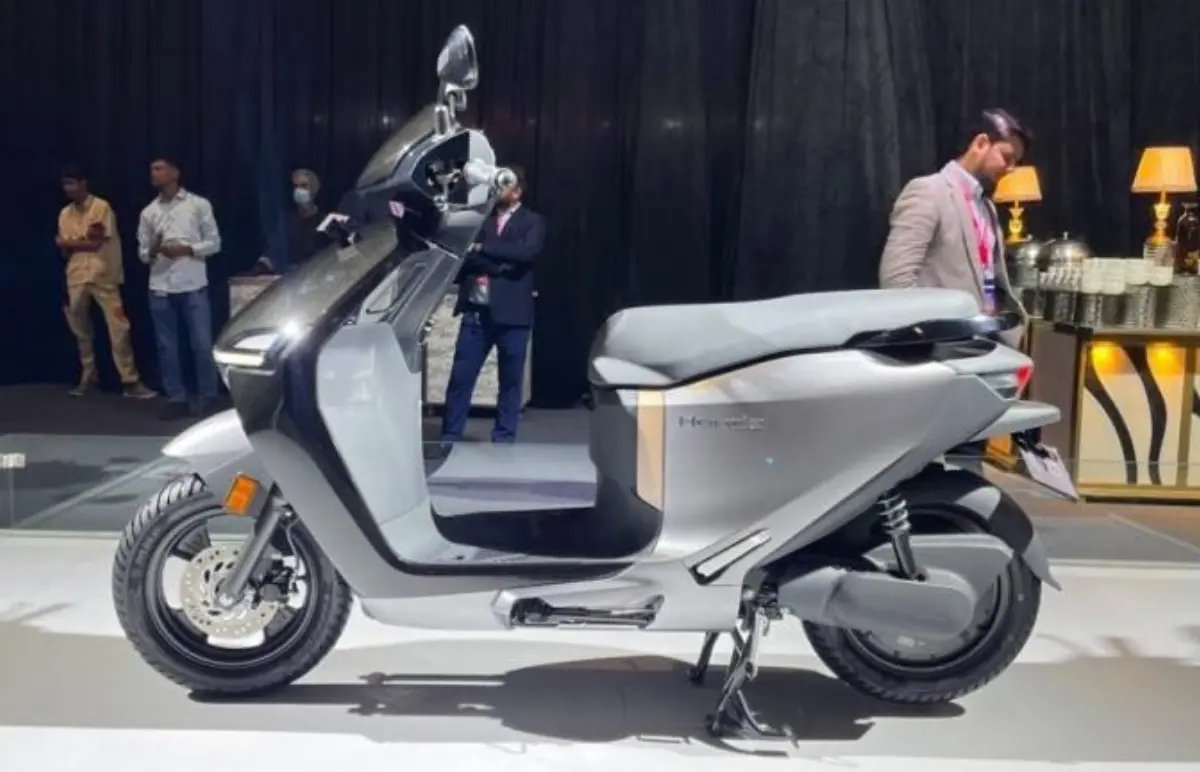
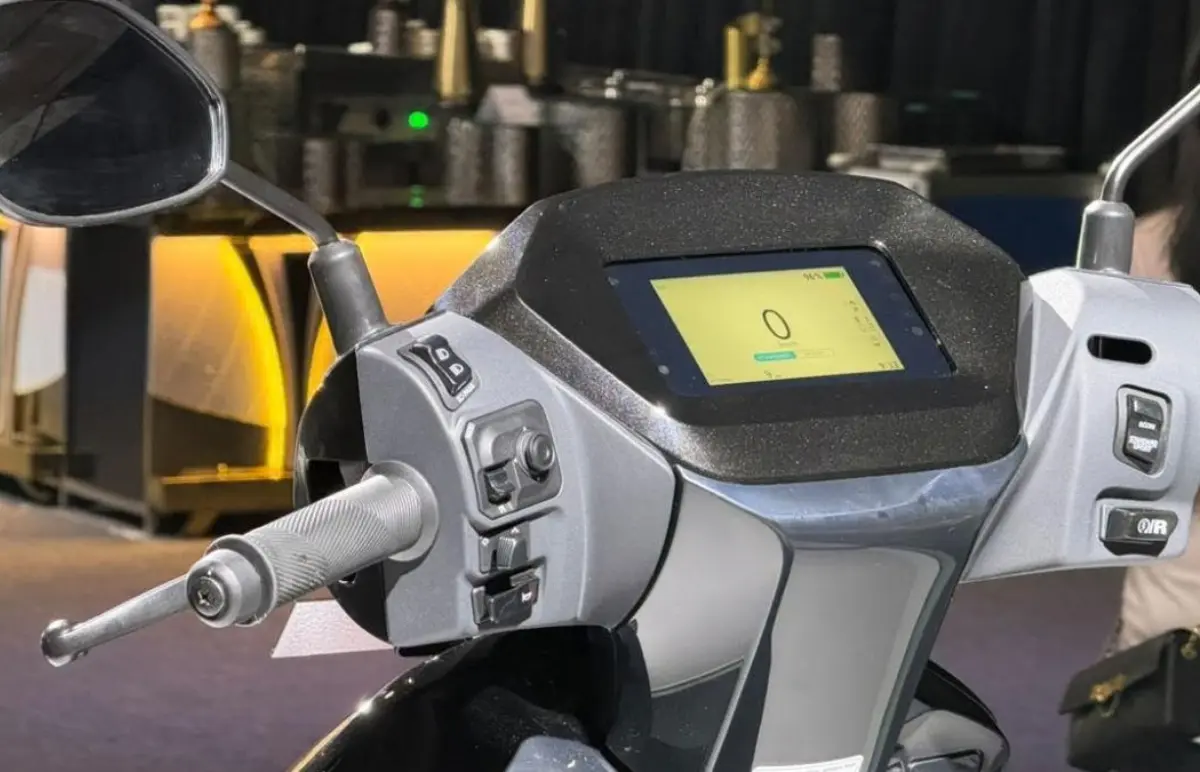
Honda has fitted the QC3 with a 5-inch TFT display, which results in a more modern look than the basic display seen on the QC1. The display works with Honda RoadSync connectivity, which offers smartphone-related features. One of the most useful features is turn-by-turn navigation, which means a rider can use the navigation functions on the go, without relying on a phone mount and having to manually refer to their smartphone.
This would be particularly useful for a family or commuter who regularly travels to unfamiliar areas of a city. The connected technology also helps to elevate the QC3’s look and feel above that of a basic commuter scooter. However, the value of connected smartphone features and navigation will depend on how often a rider uses these types of features.
Motor Performance
Honda has not released peak power and torque figures for the QC3, as per the launch information currently available. Neither has the company officially noted if the QC3 features regenerative braking. The QC3’s motor has been described as a hub-mounted motor, by Honda. Due to the lack of peak performance figures from Honda, it would be incorrect to try to estimate acceleration, top speed or climbing performance based purely on the QC3’s 3 kWh battery capacity. This serves as an important reminder for buyers that battery capacity is primarily relevant to range, it does not give a direct indication of how quickly an electric scooter will accelerate.
Braking and Everyday Use
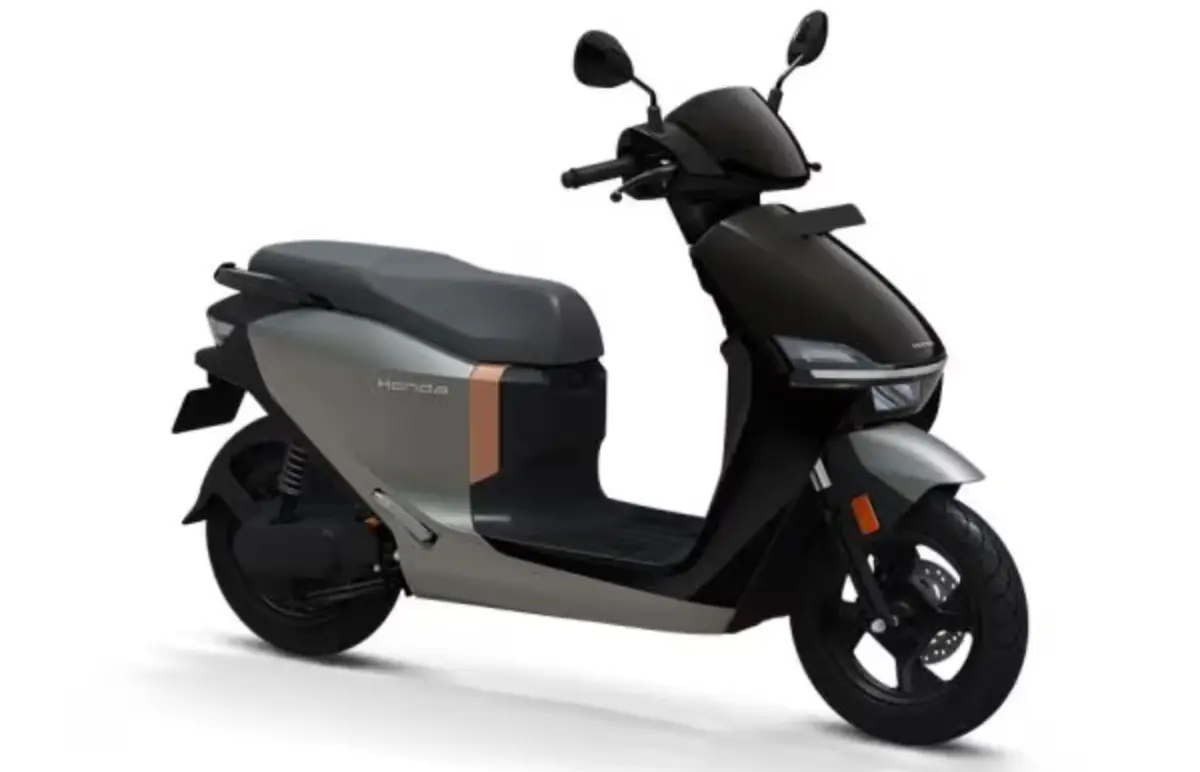
The QC3 gets a front disc brake, while specification listings identify a rear drum brake. The front disc brake is more powerful and typically found on commuter-oriented scooters. Honda has not positioned the QC3 as a high-performance scooter with advanced technology. Instead, its specification has been focused around everyday urban commuting.
As regards to safety, the most important considerations for the QC3 remain riding safety and the correct use of helmets. Tyre pressure, servicing requirements and general maintenance should also be followed. Electric scooter buyers should be mindful of charging safety, the QC3 should be charged using the recommended equipment and electrical installations, whereas damaged charging cables or connectors should not be used.
Honda QC3 VS Honda QC1 And Activa E
The QC3 expands upon Honda’s current EV lineup rather than replacing it, the QC1 is Honda’s entry-level electric scooter, while the Activa e: uses a different powertrain approach.
- The QC1 is designed around a 1.5 kWh fixed battery and offers an 80 km claimed range (IDC). It is intended for more basic city commuting.
- The Activa e: differs, as it uses two 1.5 kWh removable batteries for a combined 3 kWh capacity and a claimed 102 km range (IDC).
- The QC3’s 3 kWh battery matches the Activa e:’s combined capacity, but it has a longer claimed range of 145 km (IDC).
Furthermore, the QC3 combines this with 32 litres of under-seat storage, a TFT display and RoadSync connectivity with turn-by-turn navigation. The QC3 has been positioned as the more practical long-range family scooter within Honda’s current electric scooter lineup.
Honda QC3 Rivals
At ₹1.35 lakh ex-showroom, the QC3 has entered one of the most competitive segments for electric scooters in India. The QC3’s potential rivals would include scooters such as the TVS iQube, Bajaj Chetak, Ather Rizta, Vida VX2 and several other electric scooters in the ₹1 lakh–₹1.5 lakh range. The exact comparison will depend on the variant and city pricing. The QC3’s key differences include a 145 km range, 3 kWh battery capacity, 32 litres of storage and Honda’s two-wheeler service infrastructure. However, buyers should take a close look at the on-road price, range, charging access, performance and local service availability before considering a rival scooter.
Final Verdict
The Honda QC3 marks a significant step forward in Honda’s approach to electric scooters in India. Rather than simply focusing on entry-level electric vehicles, Honda has developed a more practical family scooter with a 3 kWh battery, 145 km range, 32-litre storage and connected technology. With a ₹1.35 lakh ex-showroom Delhi price, the QC3 will compete with several established electric scooters.
However, buyers should look beyond the range when considering the QC3l actual range, charging access, availability, on-road price and the scooter’s performance during a test ride should all be considered. As the initial QC3 launch is limited to five cities, the next important factor will be Honda’s expansion of QC3 availability across India. The QC3 provides a new option for urban families looking for a practical electric scooter, rather than a performance-focused vehicle.
Also check: 7 Best Electric Scooters Under Rs 1 Lakh India