PM E-DRIVE: Benefits, Subsidy, Charging Infrastructure, Eligibility & Latest Updates
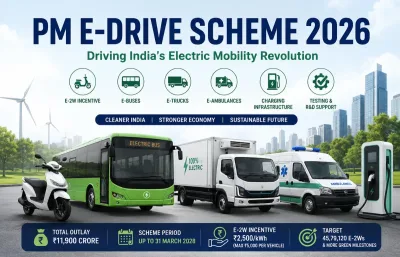
India is embracing electric mobility, and the government is playing a crucial role in accelerating the shift. The PM E-DRIVE Scheme, or the PM Electric Drive Revolution in Innovative Vehicle Enhancement Scheme, has been launched with a significant budget of ₹10,900 crore to promote the domestic electric vehicle (EV) industry and charging infrastructure. The central government notified the scheme on 29th September 2024 with an initial target period of two years.
However, the overall programme timeline has been extended to March 31 2028, whereas the terminal date for certain vehicle categories differs considerably. To begin with, the scheme offers demand incentives to consumers purchasing eligible electric two-wheelers, three-wheelers, ambulances, and trucks. Apart from that, PM E-DRIVE also covers electric bus deployment, public charging infrastructure, and upgrading vehicle-testing agencies. Considering this, we have drafted a detailed article on PM E-DRIVE new updates, benefits, subsidy, charging infrastructure, eligibility, and more.
What Is the PM E-DRIVE Scheme?
The scheme was launched to promote India’s EV ecosystem growth while targeting demand incentives, electric-bus deployment, public charging infrastructure, and testing-agency upgrades. It covers most aspects of the domestic EV market and ecosystem development. The initial budget of ₹10,900 crore was sanctioned for the financial years 2024-2026. The central government recently extended the scheme’s timeline to March 31 2028. However, the deadline for specific segments, such as electric two-wheelers and e-rickshaws, has been retained at March 31 2026.
PM E-DRIVE Budget Allocation
| PM E-DRIVE Component | Allocation (in ₹) |
| Demand incentives | 3,679 crore |
| Electric buses | 4,391 crore |
| Public EV charging | 2,000 crore |
| Testing-agency upgrades | 780 crore |
| Administrative expenses | 50 crore |
| Total | 10,900 crore |
As can be seen in the budget breakdown above, PM E-DRIVE offers a demand-incentive component for “more than 28 lakh eligible vehicles,” including electric two-wheelers, three-wheelers, ambulances, and commercial vehicles. On the other hand, ₹4,391 crore has been allocated for the deployment of 14,028 electric buses. Notably, the public EV charging component and testing-agency upgrades have also received a considerable budget share.
It is essential to understand that the PM E-DRIVE scheme is not just another consumer subsidy programme. A considerable portion of the allocated funds will be utilised for setting up the public EV charging infrastructure and promoting electric-bus deployment.
What Vehicles Are Eligible for PM E-DRIVE?
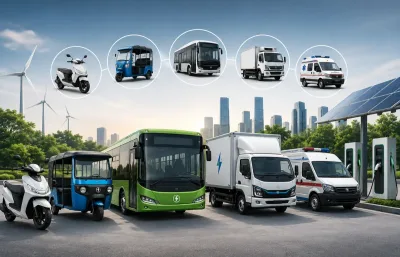
PM E-DRIVE covers several vehicle categories, albeit with varying rules and benefits. Here are the most popular EVs in India that can receive demand incentives under the scheme:
1. Electric Two-wheelers
According to the official PM E-DRIVE website, this component targets to offer incentives on “approximately 24.79 lakh eligible electric two-wheelers.” Both commercial and private registered e-2Ws can receive benefits under the scheme, subject to eligibility conditions and battery requirements. Eligible vehicles under this category include electric scooters, motorcycles, and electric cargo bikes. The demand for electric two-wheelers is rather significant in India, and the benefits under PM E-DRIVE can reduce their purchase cost considerably.
2. Eligible Electric Three-wheelers
Another significant component of PM E-DRIVE is the demand incentives for electric three-wheelers. The official scheme document reveals that the target number of eligible vehicles under this category is “approximately three lakh electric three-wheelers.” This component covers registered e-rickshaws, e-carts, and L5 electric three-wheelers. However, only commercial electric three-wheelers are eligible for demand incentives.
3. Electric Ambulances
PM E-DRIVE has a separate allocation for promoting electric ambulances and has announced a budget of ₹500 crore. According to the official PM E-DRIVE website, eligible ambulances fall under the AIS-125 category, including patient-vehicle ambulances, basic life-support ambulances, and advanced life-support ambulances.
4. Electric Trucks
Similar to electric ambulances, electric trucks have a separate allocation of ₹500 crore under PM E-DRIVE. Given their significant role in the logistics and transportation sector, the government has targeted to incentivise the purchase of commercial electric trucks. However, unlike electric two-wheelers and three-wheelers, electric trucks are an emerging segment requiring time to evolve. Incentives for electric trucks strictly require a valid scrapping certificate from MoRTH-authorized Vehicle Scrapping Facilities (RVSF). Accordingly, the government is also working on updating the manufacturing requirements and guidelines for electric trucks in 2026.
5. Electric Buses
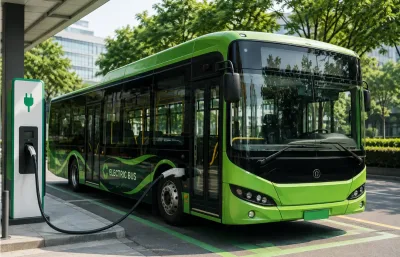
Perhaps one of the most critical components of PM E-DRIVE is electric-bus deployment. The government has allocated a massive ₹4,391 crore for promoting electric buses and has targeted to support the purchase of 14,028 electric buses. Electric buses will be deployed on an experimental basis across public transport agencies. In particular, according to reports, 13,800 e-buses will be distributed amongst Delhi, Bengaluru, Hyderabad, Mumbai, Ahmedabad, Pune, and Surat. The government has also approved the procurement of 200 e-buses to test their performance in the hilly terrain of Jammu & Kashmir.
How Does the PM E-DRIVE EV Subsidy Work?
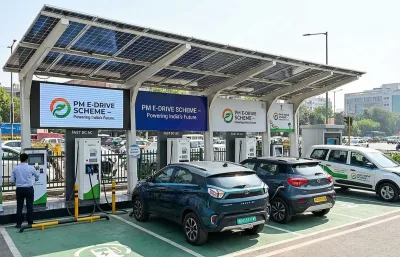
The demand incentives under PM E-DRIVE can considerably reduce the purchase cost of eligible electric vehicles. The primary goal of this component is to offer demand incentives on a broad range of EVs, including e-2Ws, e-3Ws, electric ambulances, and commercial electric trucks. However, the allocation for this component is not sufficient to cover all eligible vehicles. Instead, the government will utilise the demand-incentive component for promoting a more significant adoption rate of eligible EVs and will reimburse the manufacturers for the claim amount.
Additionally, PM E-DRIVE has also introduced an e-voucher system that can be generated from the official portal on buying an eligible EV. The e-voucher will be issued against an Aadhaar-authenticated PAN card. Crucially, the benefit amount depends on a particular EV category, battery size, date of purchase, vehicle cost, and other factors. Electric scooters and three-wheelers do not receive a fixed subsidy amount under PM E-DRIVE. Rather, the consumer will receive a specific benefit based on their particular EV model and purchase date.
Who Can Claim PM E-DRIVE EV Benefits?
PM E-DRIVE demand incentives can be claimed by private or corporate-owned registered e-2Ws and e-3Ws. On the other hand, e-3Ws are eligible for commercial usage. Crucially, a consumer can claim benefits under PM E-DRIVE only for one EV of a particular category. Additionally, the Aadhaar-authenticated mobile number of the buyer must be linked to the vehicle’s registration.
The resold vehicle is not eligible for any demand incentives under PM E-DRIVE. Government departments and agencies purchasing EVs are not eligible for demand incentives. The scheme also covers battery requirements, vehicle certification, and domestic manufacturing requirements for EVs.
Is the PM E-DRIVE Available for Electric Cars?
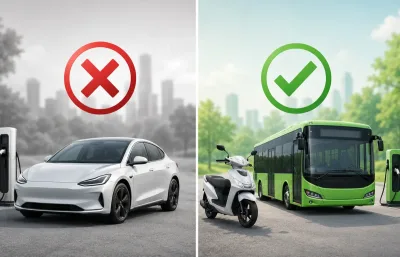
This is one of the most common questions regarding the PM E-DRIVE scheme. In short, the demand incentive component of PM E-DRIVE does not cover private passenger cars. The current EV purchase benefits do not apply to the general consumer buying an electric car for personal usage. However, PM E-DRIVE covers a wide range of EV categories, including electric two-wheelers, three-wheelers, ambulances, and commercial trucks. Accordingly, even though individual car buyers will not receive direct benefits from this scheme, the expansion of the public charging infrastructure and e-bus deployment can considerably impact the electric car market.
PM E-DRIVE and EV Charging Infrastructure
One of the most critical areas of India’s electric mobility push is the public EV charging infrastructure. The central government has allocated ₹2,000 crore for creating a robust and sustainable public EV charging ecosystem across the country under PM E-DRIVE. The scheme’s EV charging component will play a pivotal role in improving the charging accessibility of electric cars, buses, two-wheelers, and three-wheelers, particularly in urban areas and along major roads.
The initial allocation under PM E-DRIVE targeted to establish a network of fast chargers for electric cars, fast chargers for electric buses, and charging infrastructure for electric two-wheelers and three-wheelers. The Union Ministry of Heavy Industries has also released the PM E-DRIVE Charging Infrastructure Guidelines for electric vehicle charging stations.
How Much Will Charging Infrastructure Benefit EV Owners?
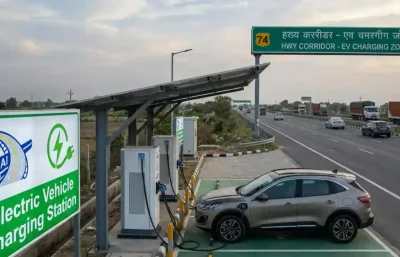
The central government has unveiled the structure for the EV charging component under PM E-DRIVE. In particular, the scheme will provide a capital subsidy on a reimbursement basis for setting up public EV charging stations. The reimbursement capacity depends on the location category of the charging station. Here is the breakdown:
| Location Category | Upstream Infrastructure | EVSE/Charging Equipment |
| A: Government | 100% | 100% |
| B: Selected Government/Public Sector Locations | 80% | 70% |
| C: Other Locations | 80% | — |
| D: Battery Swapping/Charging Stations | 80% | — |
Location category ‘A’ includes government offices, government hospitals, government educational institutes, etc. All government-owned premises fall under this category. The EV charging stations at these locations must be publicly accessible. On the other hand, location category ‘B’ includes railway stations, airports, public-sector oil depots, bus stands, metro stations, municipal parking lots, and selected highway service stations. Furthermore, location category ‘C’ covers other areas, including street parking lots, shopping malls, market complexes, highways, and expressways. Finally, category ‘D’ covers battery swapping and battery charging stations.
Who Can Set Up EV Charging Infrastructure Under PM E-DRIVE?
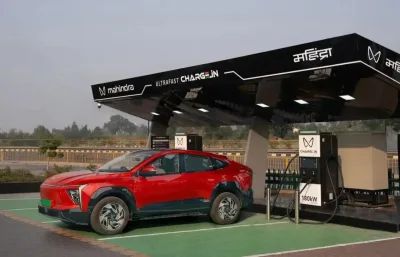
The public EV charging infrastructure component under PM E-DRIVE has a different set of guidelines as compared to the demand-incentive component for eligible EVs. In particular, the following entities can apply for setting up EV charging stations under PM E-DRIVE:
- Central Ministries
- Central Public Sector Enterprises
- Autonomous Bodies
- State Governments
- Union Territories
- State Public Sector Undertakings
In particular, the aforementioned entities can nominate nodal agencies to collate the demand for EV charging infrastructure and manage its implementation. The nodal agencies can also hire Charge Point Operators for installing and managing the charging infrastructure. Establishing EV charging stations is an unlicensed activity under the Ministry of Power’s guidelines, and private entities can enter this segment.
PM E-Drive Charging Infrastructure Update 2026
India’s EV charging infrastructure has witnessed substantial growth in recent years. According to the Ministry of Heavy Industries report released in July 2026, India possesses a public EV charging infrastructure of 52,718 stations with 16,561 fast chargers for cars, as of the BHEL portal. Crucially, this number does not depict the actual charging infrastructure covered under the PM E-Drive scheme. The Ministry of Heavy Industries approved the ₹503.86 crore sanction for 4,874 EV chargers in May 2026.
Who Will Benefit the Most from PM E-DRIVE?
India’s EV market encompasses a diverse range of segments, including private and commercial electric two-wheelers, three-wheelers, ambulances, electric buses, and electric cars. In the short term, private e-two-wheelers and e-three-wheelers are likely to benefit immensely from the demand incentives under PM E-DRIVE. At the same time, the electric car segment will also benefit indirectly from this scheme.
In particular, India’s public EV charging infrastructure will receive considerable support from the central government under PM E-DRIVE. Additionally, commercial EVs, including electric buses, ambulances, and trucks, will immensely benefit from this scheme because the central government will directly subsidise their procurement cost.
Conclusion
The PM E-DRIVE scheme is one of the most significant initiatives of the Government of India in the field of electric mobility. With a total budget of ₹10,900 crore, this scheme covers most aspects of India’s electric mobility needs, including EV demand incentives, infrastructure development, battery storage, and charging solutions. Apart from that, public transport agencies will also receive significant support from the government under this programme.
The indirect impact of this scheme will be felt by all EV owners in India, including private and commercial electric two-wheelers, three-wheelers, and electric buses and trucks. Moreover, the upgraded vehicle-testing agencies under this scheme will also benefit from the entire EV ecosystem.