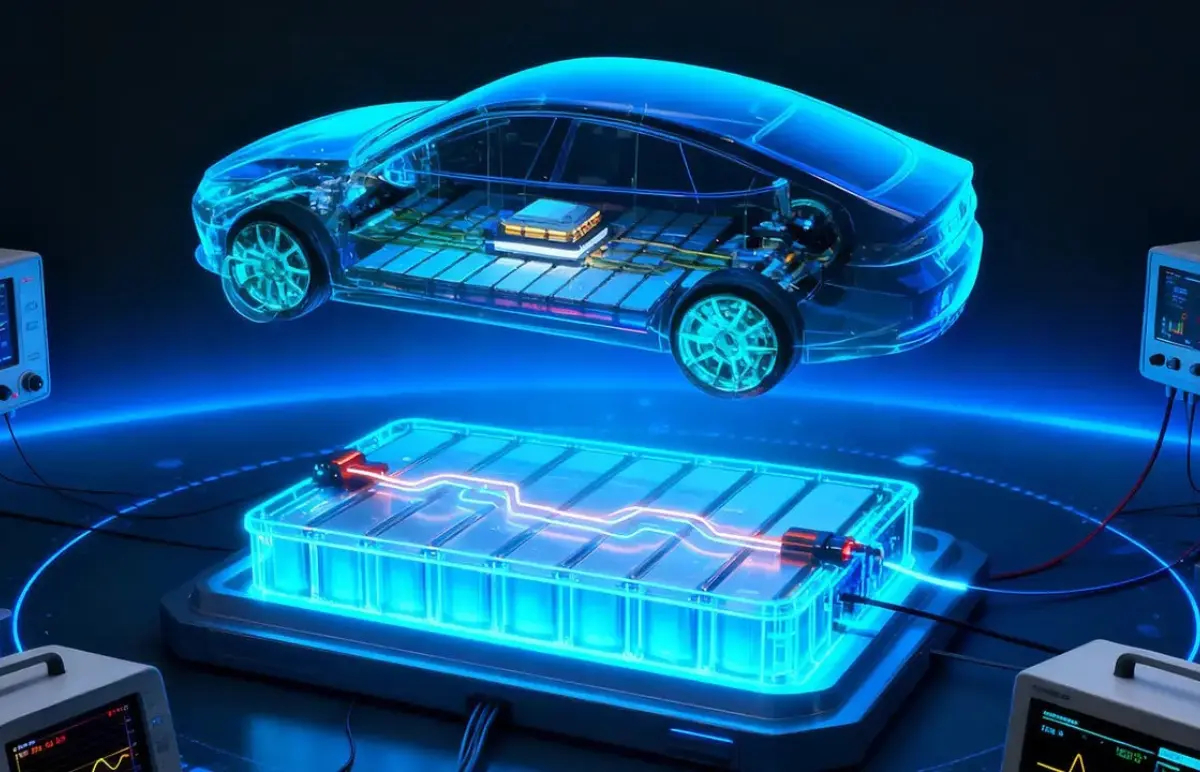
15 Electric Vehicle Myths and Facts in India 2026: Battery, Range and Charging Truth
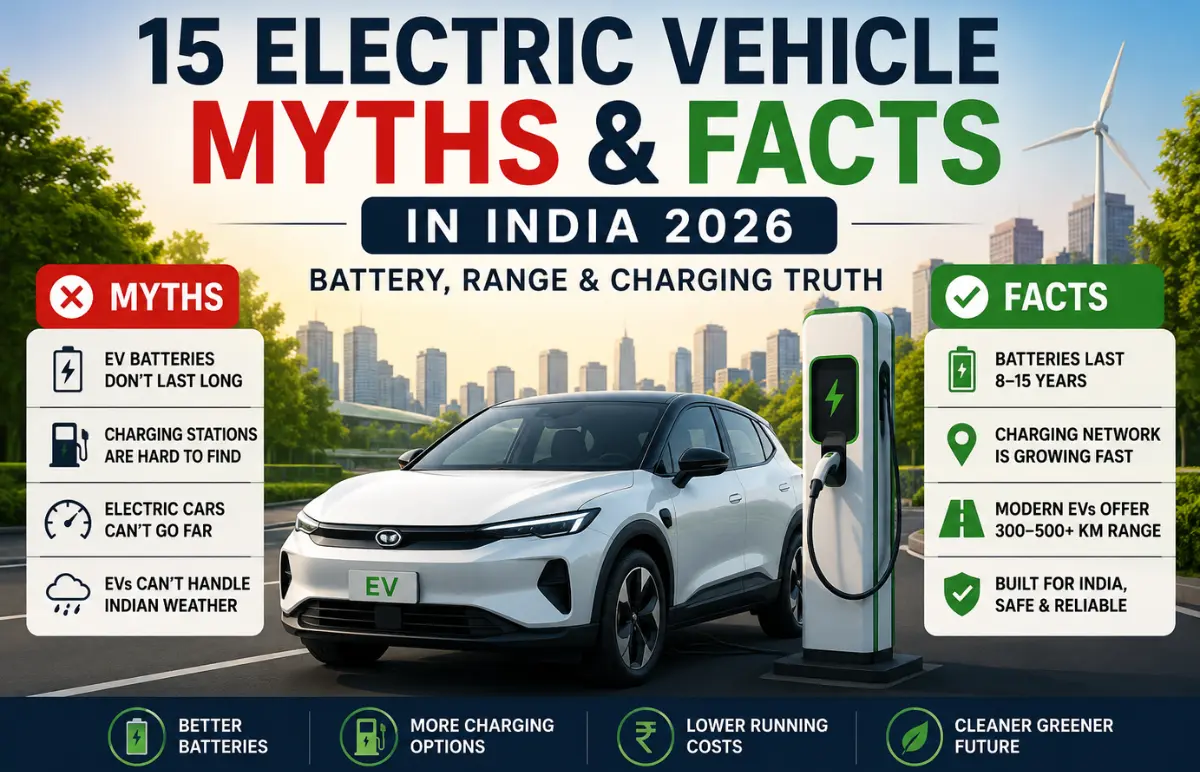
Electric vehicles (EVs) are becoming increasingly popular in India, with more people choosing them over traditional petrol and diesel cars. Leading carmakers like Tata Motors, Mahindra, MG, Hyundai, BYD, Kia, and Maruti Suzuki now offer electric cars across different price segments. Better battery technology, improved driving range, expanding charging infrastructure, government support, and rising fuel prices have made EVs a practical option for everyday use. As a result, more buyers are searching for reliable information before making the switch to electric mobility.
However, many electric vehicle myths still create confusion among buyers. Some people believe EV batteries need frequent replacement, charging stations are difficult to find, or electric cars cannot handle Indian weather. The truth is that modern EVs are more reliable, safer, and more efficient than ever before. In this guide, we bust the 15 biggest electric vehicle myths and facts in India (2026) and explain the truth about EV battery life, charging time, driving range, maintenance costs, safety, and overall ownership, helping you make an informed decision before buying an electric vehicle.
Electric Vehicle Myths and Facts in 2026
Myth 1: EV Batteries Need Replacement Every 3–5 Years
The Myth: One of the biggest electric vehicle myths which concerns prospective buyers is that an EV battery will become unusable after just a few years, leading to an expensive replacement.
The Truth:
Modern electric vehicles use advanced lithium-ion battery packs designed for long-term durability. Manufacturers invest heavily in battery engineering because the battery is the most important component of an EV. Most electric cars sold in India today come with battery warranties of 8 years or 1.6 lakh kilometres is the standard minimum, premium or new gen 2026 now provide up to lifetime protection, and many batteries continue to perform well even after the warranty period ends.
Battery degradation happens gradually rather than suddenly. Instead of failing overnight, the battery slowly loses a small percentage of its capacity over many years. For example, after several years of use, an EV that originally offered 400 km of range may still comfortably deliver 340–360 km depending on driving conditions and charging habits.
Fact: Most EV owners are unlikely to replace the battery during their ownership period.
Myth 2: Once the Battery Warranty Ends, the Battery Is Finished
The Myth: Many buyers believe the battery stops working immediately after the warranty expires.
The Truth:
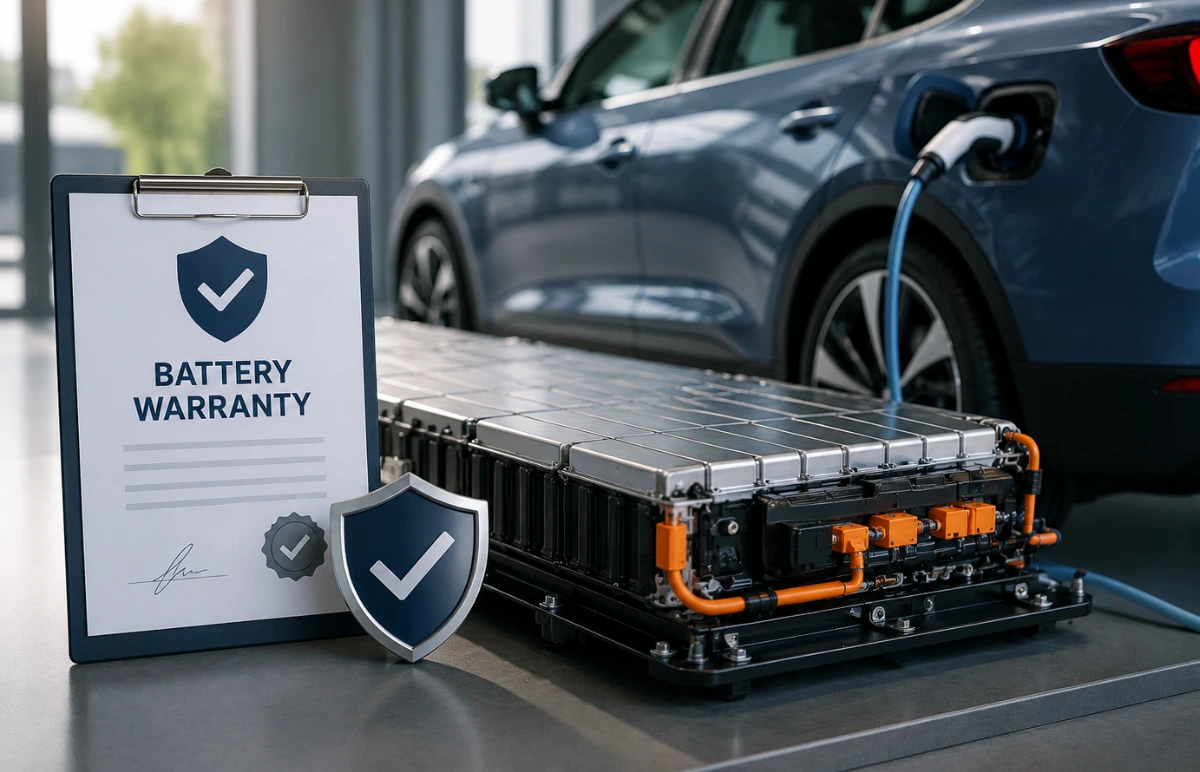
A battery warranty simply guarantees a minimum level of battery health, not the battery's lifespan. Most manufacturers promise that the battery will retain around 70–75% of its original capacity during the warranty period. If the battery degrades below this threshold within warranty, it may qualify for repair or replacement.
After the warranty expires, the battery continues to function normally. The only noticeable difference may be a slight reduction in driving range. This is similar to how smartphone batteries gradually lose capacity over time while continuing to operate.
Fact: Battery warranty expiry does not mean battery failure.
Myth 3: Electric Cars Can't Travel Long Distances
The Myth: One of the electric vehicle myths is that EVs are suitable only for city driving and cannot be used for highway trips.
The Truth:
This statement was partly true several years ago when most EVs offered limited driving ranges. Today, however, battery technology has improved significantly. Many electric cars available in India now deliver practical ranges between 300 and 500 kilometres on a full charge, depending on the model and driving conditions.
Highways across India are also seeing a rapid expansion of fast-charging stations, making intercity travel increasingly convenient. Drivers simply need to plan charging stops in advance, much like planning fuel stops during long journeys.
Fact: Modern EVs are fully capable of long-distance travel when routes are planned properly.
Myth 4: Charging an EV Takes an Entire Day
The Myth: People often assume charging is extremely slow and inconvenient.
The Truth:
Charging time depends entirely on the type of charger being used. A standard household socket may require overnight charging, while a dedicated AC home charger significantly reduces charging time. For highway travel, DC fast chargers can recharge most modern EVs from 10% to 80% in roughly 20–60 minutes, depending on the vehicle.
Since most Indian car owners drive well below 60 km per day, overnight home charging is usually sufficient for everyday needs. In practice, many EV owners never visit a public charger during their regular weekday routine.
Fact: For daily commuting, charging is usually as simple as plugging the vehicle in before going to bed.
Myth 5: India Doesn't Have Enough Charging Stations
The Myth: Charging infrastructure is too limited to own an electric vehicle.
The Truth:
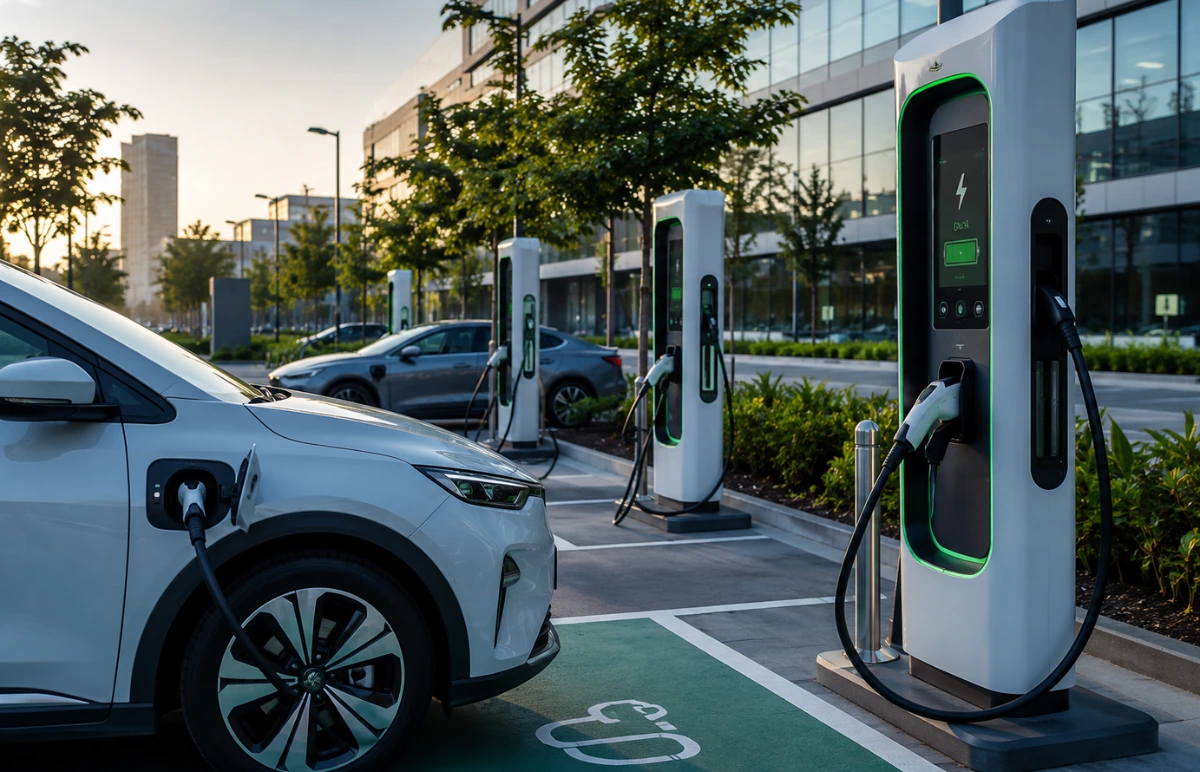
India's charging network has expanded rapidly over the past few years. Charging stations can now be found at shopping malls, metro stations, hotels, airports, office complexes, petrol pumps, residential societies, national highways, public parking spaces, and more.
In addition, several mobile applications allow drivers to locate available chargers, check connector compatibility, and even make digital payments. Although charging infrastructure continues to improve, it is no longer limited to a handful of metropolitan cities.
Fact: Finding a charging station has become much easier than many people assume.
Myth 6: Electric Vehicles Catch Fire More Often Than Petrol Cars
The Myth: News reports about EV fires have created fear among potential buyers.
The Truth:
Vehicle fires involving electric cars receive significant media attention because the technology is relatively new. However, petrol and diesel vehicle fires occur every year as well, often due to fuel leaks, electrical faults, accidents, or engine overheating. Modern electric vehicles include multiple safety systems such as:
- Battery Management Systems (BMS)
- Temperature monitoring
- Thermal protection
- Automatic current regulation
- Battery cooling systems
- High-voltage isolation mechanisms
Manufacturers also conduct extensive crash and safety testing before launching vehicles.
Fact: Modern EVs are designed with multiple layers of battery protection and are considered safe for everyday use.
Myth 7: Heavy Rain Will Damage an Electric Vehicle Battery
The Myth: Because electricity and water don't mix, many people believe EVs become dangerous during monsoons.
The Truth:
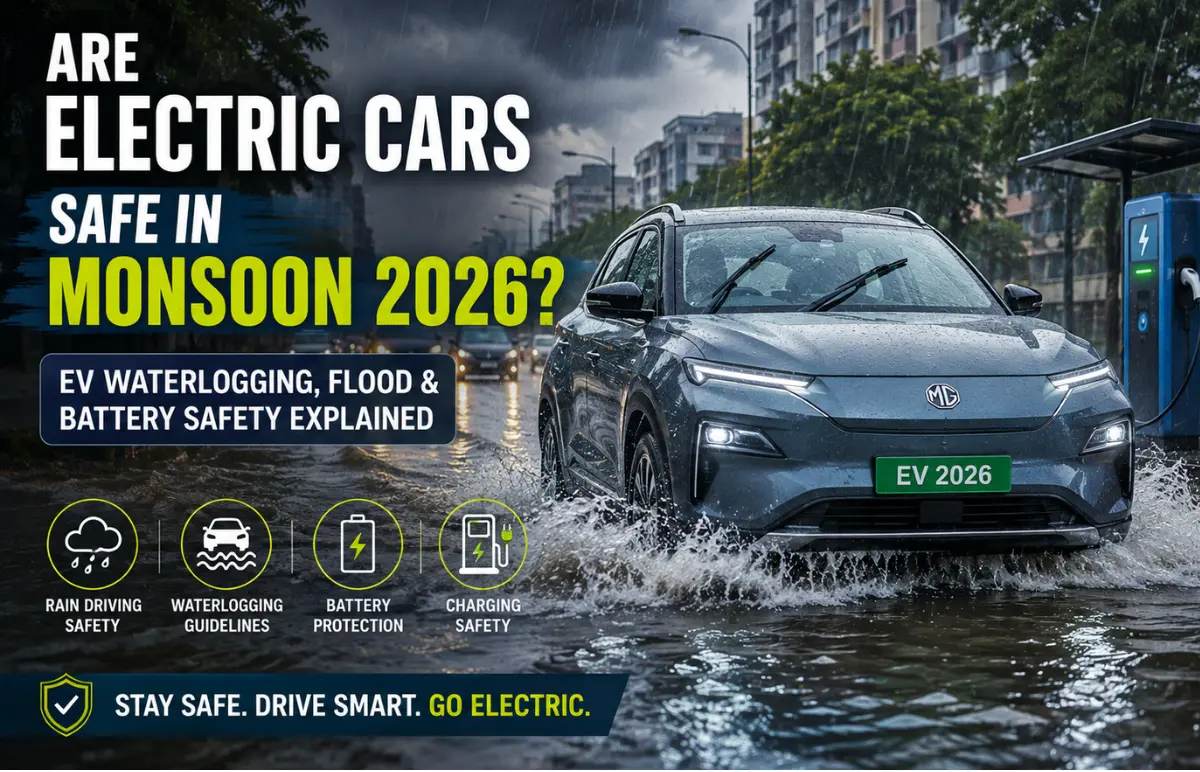
Electric vehicles are specifically engineered to operate in rainy conditions. Battery packs are enclosed within sealed, waterproof casings that meet stringent international safety standards. High-voltage components are carefully insulated to prevent water intrusion during normal driving. Manufacturers test EVs extensively in, Heavy rainfall, Water splashes, High humidity, Dust, and Extreme weather conditions. However, just like petrol or diesel vehicles, EVs should not be driven through deep floodwater because flood damage can affect multiple vehicle systems, not just the battery.
Fact: Driving an EV during India's regular monsoon season is completely safe when normal precautions are being followed.
Myth 8: EV Batteries Cannot Handle Indian Summers
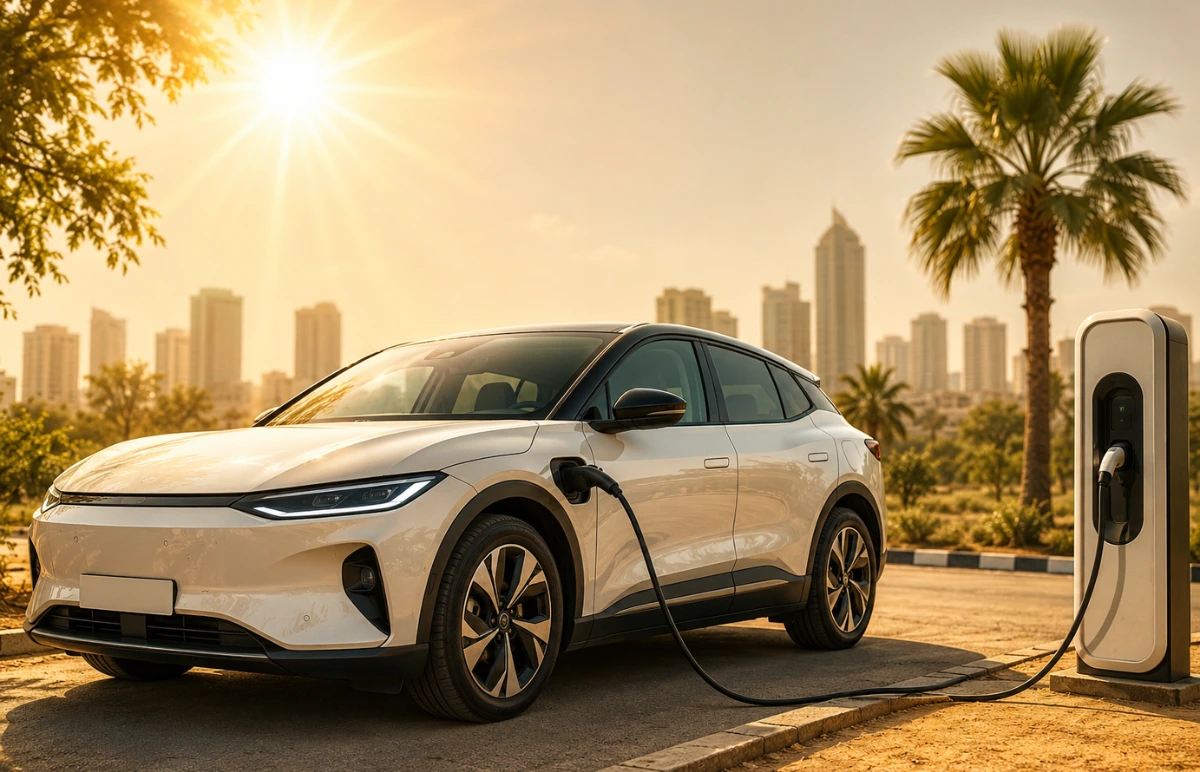
The Myth: India experiences temperatures above 45°C in many regions during summer. This has led to a common belief that electric vehicle batteries quickly overheat, degrade, or become unsafe in hot weather.
The Truth:
Modern electric vehicles sold in India are specifically tested for extreme weather conditions before launch. Manufacturers conduct extensive testing in deserts, high-temperature environments, mountainous regions, and congested city traffic to ensure the battery performs safely.
Most new-generation EVs use advanced Battery Management Systems (BMS) that continuously monitor battery temperature, voltage, and charging conditions. Premium EVs also feature liquid-cooled battery packs, while virtually all modern passenger electric cars in India now feature liquid-cooled battery packs to survive extreme summers.
During extremely hot weather, you may notice a slight reduction in driving range because the air conditioner and battery cooling system consume additional energy. However, this is temporary and does not indicate battery damage. Just as petrol engines become slightly less efficient under extreme conditions, EV batteries also experience minor efficiency changes, but they remain completely safe.
Tips for Better Battery Health
- Park in shaded areas whenever possible.
- Avoid leaving the battery at 100% charge for extended periods.
- Use scheduled charging if your vehicle supports it.
- Keep the software updated, as manufacturers frequently improve thermal management through updates.
Fact: Indian summers may slightly affect driving range, but they do not significantly reduce battery life when the vehicle is used normally.
Myth 9: Fast Charging Always Damages the Battery
The Myth: Electric vehicle myths are also that using DC fast chargers regularly will quickly destroy an EV battery.
The Truth:
Fast charging generates more heat than normal AC charging, which is why people assume it harms the battery. In reality, modern EV batteries are designed to support fast charging safely. The Battery Management System carefully controls charging speed based on battery temperature, charge level, and overall health. You may notice that charging speed automatically slows after 80%. This is intentional.
It protects the battery from excessive heat and prolongs its lifespan. While relying exclusively on DC fast charging every day may contribute to slightly faster battery degradation over many years, the impact is generally small for most drivers. Most EV owners primarily charge at home and use fast chargers only during long journeys.
Fact: Occasional fast charging is perfectly safe and is exactly what modern EVs are designed for.
Myth 10: Electric Cars Have Poor Performance
The Myth: Electric cars are slow and lack the power needed for highways or overtaking.
The Truth:
This is one of the easiest myths to disprove. Unlike petrol and diesel engines, electric motors deliver maximum torque instantly. This means the vehicle accelerates immediately without waiting for engine RPM to build.
This instant acceleration makes EVs feel quicker in city traffic, at traffic signals, and during overtaking. Even entry-level electric cars often feel more responsive than similarly priced petrol vehicles. Premium electric vehicles can accelerate from 0–100 km/h in just a few seconds, but even affordable EVs provide smooth, quiet, and effortless performance for daily driving.
Fact: Electric vehicles offer excellent acceleration and are often quicker than comparable petrol cars in real-world conditions.
Myth 11: EV Maintenance Is Very Expensive
.webp)
The Myth: Since EV technology is advanced, servicing must also be expensive.
The Truth:
In reality, electric vehicles have far fewer mechanical components than conventional vehicles. An EV does not require:
- Engine oil changes
- Spark plug replacement
- Clutch maintenance
- Timing belt replacement
- Fuel injectors
- Exhaust repairs
- Engine air filters
Routine servicing mainly includes:
- Brake inspection
- Tyre rotation
- Suspension checks
- Cabin air filter replacement
- Coolant inspection (where applicable)
- Software updates
- Regenerative braking also reduces wear on brake pads, helping them last longer.
Fact: Most EV owners spend considerably less on maintenance than petrol or diesel vehicle owners over the life of the vehicle.
Myth 12: Electric Vehicles Are Too Expensive
The Myth: One of the biggest electric vehicle myths is that buying an EV costs far more than buying a petrol car.
The Truth:
The initial purchase price of an EV is often higher because batteries remain one of the most expensive vehicle components. However, purchase price tells only part of the story. When calculating the total cost of ownership, EVs often prove more economical because they offer:
- Lower running costs
- Reduced servicing expenses
- Fewer replacement parts
- Lower fuel costs
- Government incentives (where applicable)
For drivers covering high monthly distances, these savings can add up significantly over several years. As battery production increases and technology becomes more affordable, EV prices are also becoming increasingly competitive.
Fact: Although the upfront price may be higher, the overall ownership cost is often lower over time.
Myth 13: Charging an EV Costs Almost as Much as Buying Petrol
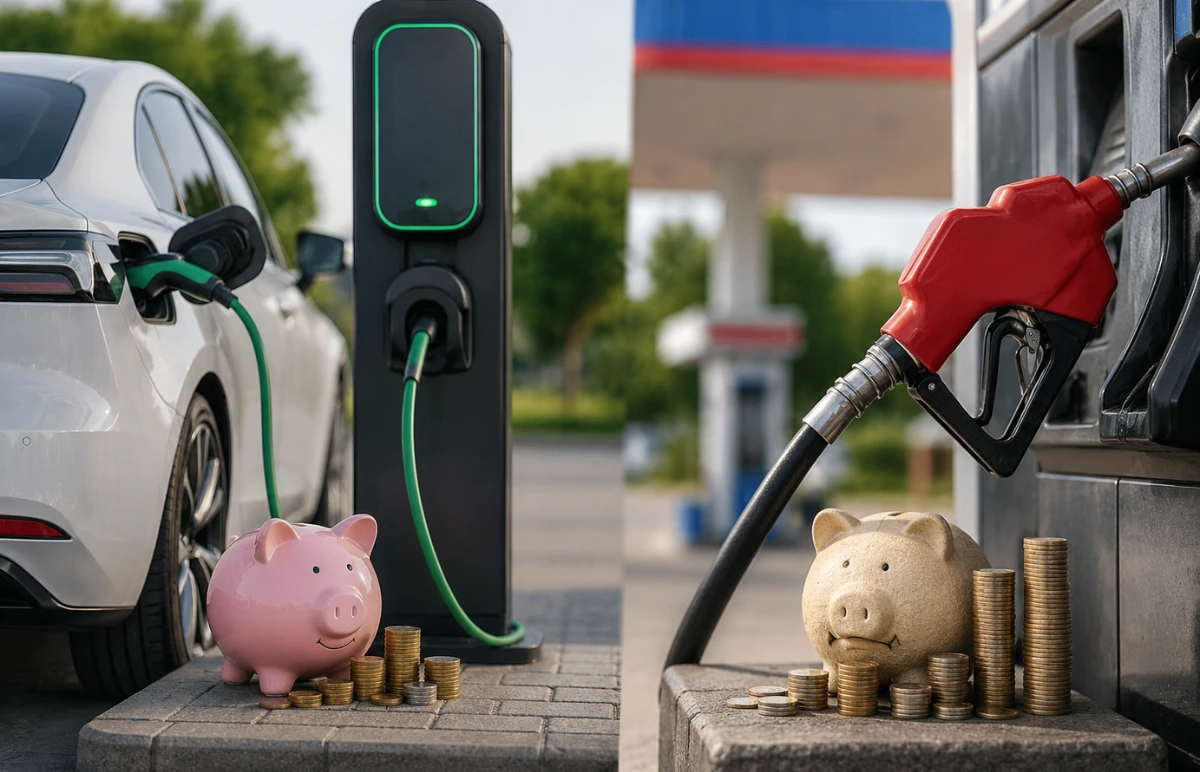
The Myth: Electricity bills become so high that there is little difference compared to petrol expenses.
The Truth:
Charging an EV at home is generally much cheaper than refuelling a petrol or diesel vehicle for the same distance. Actual costs depend on:
- State electricity tariffs
- Time-of-day charging rates
- Vehicle efficiency
- Battery size
Even with varying electricity prices across India, the running cost per kilometre of an EV is usually significantly lower than that of a petrol vehicle. Public DC fast chargers are more expensive than home charging, but they are primarily intended for long-distance travel rather than everyday use.
Fact: Home charging remains one of the biggest financial advantages of owning an electric vehicle.
Myth 14: Used Electric Vehicles Have No Resale Value
The Myth: Nobody wants to buy a second-hand EV.
The Truth:
The used EV market in India is steadily growing as consumer confidence improves. Today's buyers understand that battery health can be measured, warranty coverage can often be transferred, and many modern batteries retain most of their capacity even after years of use. Factors affecting resale value include:
- Remaining battery warranty
- Overall battery health
- Vehicle condition
- Brand reputation
- Service history
- Charging habits
- Manufacturers and dealerships are also introducing certified pre-owned EV programmes, making resale easier and more transparent.
Fact: A well-maintained EV with good battery health can retain strong resale value.
Myth 15: Electric Vehicles Are Only Suitable for City Driving
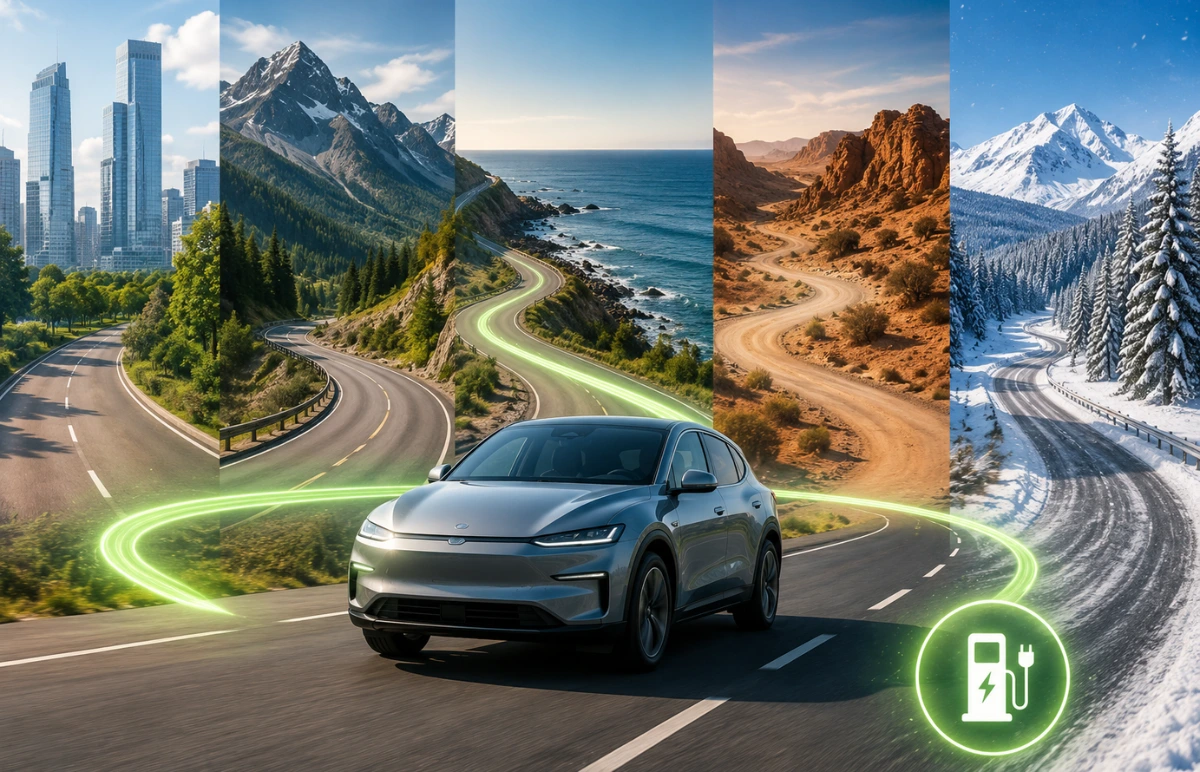
The Myth: EVs cannot replace petrol cars for family trips or highway driving.
The Truth:
Earlier EVs had limited range and slower charging speeds, making long journeys challenging. Today's EVs are very different. Modern electric SUVs and sedans offer:
- Practical ranges exceeding 400 km
- Rapid DC fast charging
- Improved highway efficiency
- Navigation systems that suggest charging stops
- Better thermal management for long drives
Weekend road trips and intercity travel have become increasingly common among EV owners. The key is planning charging stops in advance, much like planning fuel stops in remote areas.
Fact: Modern EVs are no longer limited to city commuting and are increasingly suitable for long-distance travel.
Final Thoughts
Electric vehicles (EVs) have evolved significantly over the past few years, making them a practical choice for many Indian buyers. Improvements in battery technology, longer driving ranges, better safety features, and the rapid expansion of charging infrastructure have addressed many of the concerns that once held people back. While electric vehicle myths like batteries, charging, and performance still exist, modern electric cars are far more reliable and efficient than ever before.
That said, an EV may not be the right choice for everyone. Before buying one, consider your daily driving needs, charging availability, travel habits, and budget. For many city commuters and even regular highway users, an electric vehicle can offer lower running costs and easier maintenance than a petrol or diesel car. The key is to make your decision based on facts and your driving requirements rather than outdated myths or misinformation.