Can Minors Ride Electric Scooters Without a Licence in India? Rules, Age Confusion and Safety Risks
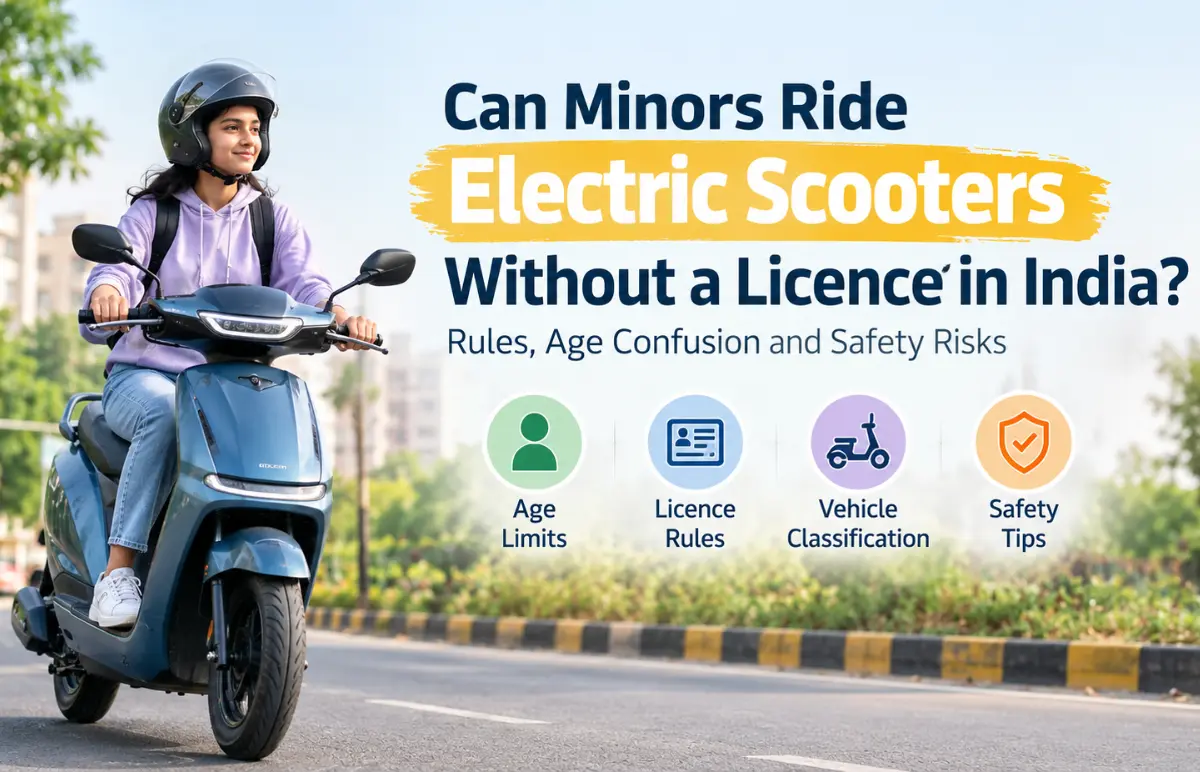
Electric scooters are becoming increasingly popular in India, and they are also drawing in younger riders. Their simple controls, quiet operation and relatively low running costs can appeal to teenagers and parents, but one question creates considerable confusion: Can a minor ride an electric scooter without a licence in India? The answer depends on the legal classification and specifications of the electric two-wheeler.
Indian rules classify certain low-speed battery-operated vehicles and electric scooters as motor vehicles. This means that a minor cannot automatically ride every electric scooter, while some qualifying low-speed electric two-wheelers may not require a driving licence. Knowing the difference is important before a parent buys or allows a child to ride an electric scooter on public roads. This guide states everything about if a minor can ride an electric scooter, exceptions, limitations, rules, consequences,things to consider for parents and more.
Can Minors Legally Ride Electric Scooters in India?
.webp)
Whether a minor can legally ride an electric scooter depends mainly on what type of electric scooter it is. For electric scooters, the motor power and top speed are important. Some low-speed electric two-wheelers may not be treated as motor vehicles if they satisfy all the conditions specified under Rule 2(u) of the CMVR, including a 30-minute motor power below 0.25 kW, maximum speed below 25 km/h, specified safety equipment and weight limits, with the required verification by an authorised testing agency.
However, scooters that do not meet these conditions are treated as motor vehicles and must follow the applicable licence, registration and insurance rules. So, parents should check the scooter's official specifications, certification and legal classification before allowing a minor to ride it.
What About 16-Year-Old Riders?
The law allows a person aged 16 or above to obtain a learner's licence (without gear) for a motorcycle with an engine capacity of up to 50cc, with the required parental or guardian consent. However, 50cc motorcycles are now uncommon in India's market, so this provision has limited relevance to most modern two-wheeler buyers. For electric scooters, the vehicle's legal classification is more important than the rider's age alone. Parents should check the scooter's official specifications, certification and applicable rules before allowing a minor to ride it on public roads.
What Happens If a Minor Rides Illegally?
.webp)
In addition to the penalties for the minor, the parent or the owner of the vehicle can also be penalized for illegal riding of a minor. According to Section 199A of the Motor Vehicles Act, the punishment for such offence could be,
- Up to 3 years of imprisonment
- Fine of up to ₹25,000
- Cancellation of registration of the vehicle for a period of 12 months
- Prohibition on the issuing of driving or learner licence until the age of 25 for the minor
However, the guardian or owner of the vehicle can be exempt from the punishment if they could prove that they were not aware of the illegal activity committed by the minor or took all measures to prevent such action.
Also check: Best Low Speed Electric Scooters in India
Safety Risks for Minors Riding Electric Scooters
.webp)
Even if permitted by the law, the risk of a child or adolescent being involved in an accident while riding a low-speed electric scooter can be high due to inexperience. It is essential for parents to be acquainted with the following potential risks associated with the scooter use:
- Limited riding experience: Inexperienced riders must understand that the scooter’s speed and the distance between them and other vehicles are often hard to estimate.
- Acceleration / Braking: The scooter usually accelerates faster than a bicycle and can unexpectedly slow down. An inexperienced rider might accelerate at a higher level than intended or miscalculate the required distance for braking.
- Traffic / Turning: Traffic rules, pulling out of parking lots, and sidewalks require special attention.
- Passengers: A passenger on the scooter can adversely affect its handling and braking.
- Night / Wet weather: Reduced visibility at night or on bad roads and obstacles such as potholes, cars, and pedestrians can cause the scooter to skid.
Therefore, for a young person, the fundamental riding skills, along with special caution while riding, are safer even for a scooter with a reduced maximum speed.
Which Electric Scooters Can Be Used Without a Licence?
.webp)
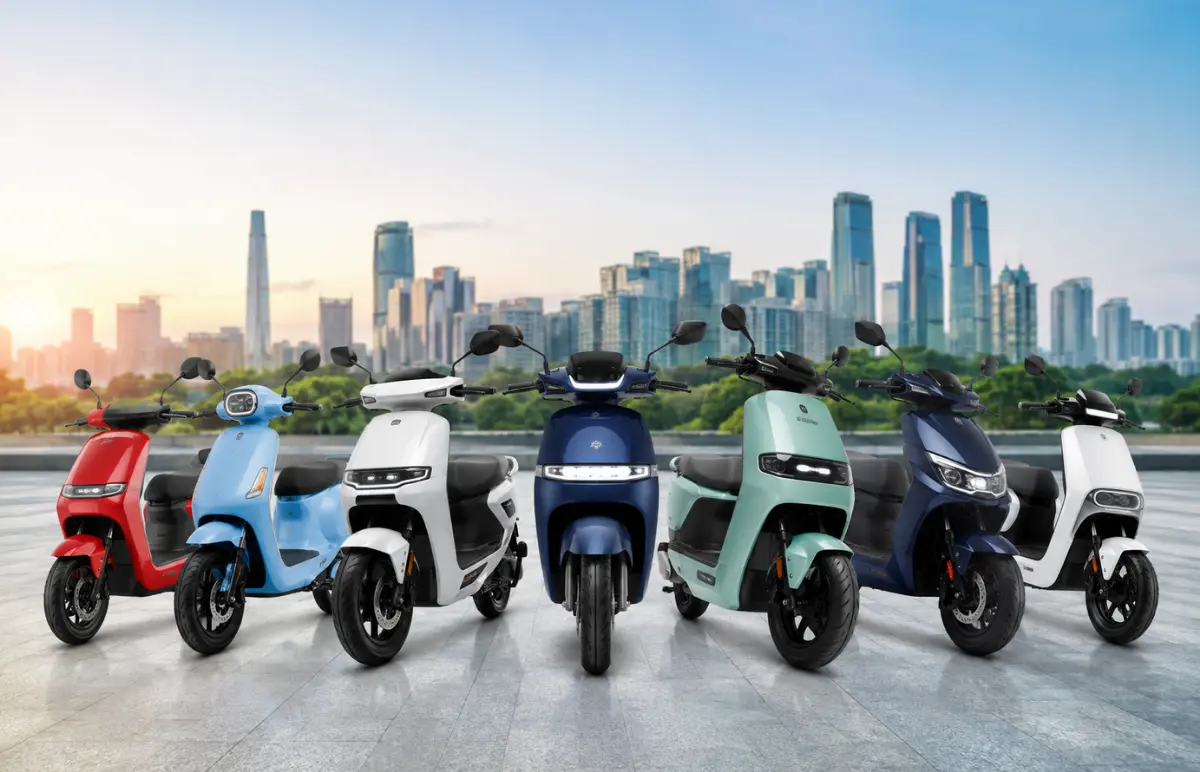
There are some electric scooters in India that are specially made for low speeds so that they fall under the category of not requiring a licence. However, it is important that parents research the exact legal status of the scooter model before letting their child ride it.
- Ampere Reo Vyb: This is a low-speed scooter with a maximum speed of 25 kmph. Ampere currently states that the scooter does not require any licence or registration.
- Okinawa Lite: The scooter has a 25 km/h top speed, 250W motor and the manufacturer states that RC is not required.
- Lectrix SX25: Low-speed electric scooter with a top speed of 25 km/h. Lectrix states that it does not require a driving licence or registration.
- Joy e-bike Wolf: Made using a 250W motor and with a top speed of 25 km/h. This scooter is marketed as a no-licence, no-registration model by the company Joy e-bike.
- Joy e-bike Gen Next Nanu: Similar to the Wolf model, this scooter also makes use of a 250W motor along with a 25 km/h top speed. The manufacturer mentions that no licence or registration is required for this model as well.
Important: A manufacturer’s claim of a “no licence” model should not be taken as an encouragement for every minor to get the scooter. Before heading out onto roads, it is important to research about the exact legal status of the model in question.
How Parents Can Keep Minor EV Riders Safe and Legal
.webp)
Before letting their child drive a scooter, parents need to research the legal requirements as well as the standard safety measures. Checking the following list will ensure that everyone stays safe and legal while riding an electric scooter:
- Review the scooter specs: Check the top speed, motor, and vehicle category of the scooter you are planning to buy. Never believe the “licence-free” claims written on the scooter websites.
- Check the legal requirements: It is mandatory for the parents to go through the list of things needed to register, insure, or drive a scooter.
- Check the necessary documents: A buyer must ensure that the vehicle has all the necessary documentation provided by the manufacturer and other legal authority. In case of any doubts about the scooter documents, it is essential to get the required validation from the manufacturer or local RTO.
- Practice: Before hitting the road, ask your child to master the art of braking and turning, and learn how to accelerate, especially in an empty park.
- Wear a helmet: A two-wheeler vehicle is one of the most dangerous modes of transportation, and a rider can suffer fatal injuries if not equipped with the right safety gear. A helmet reduces the chances of fatal injuries by 40% and head injury by 60-70%.
- No adventure for minors: A beginner rider must not hit the road without a valid driving licence and should avoid busy traffic, distractions like mobile phones or music, and carrying other passengers.
A licence-free vehicle doesn’t mean it is safe, and therefore, it is the duty of every parent to ensure that minors should only drive a vehicle that suits their needs and has proper safety gear installed.
Also check: Are ₹40,000 Electric Scooters a Scam? | Low-Speed EVs
Conclusion
.webp)
The rules in India for minors riding electric scooters are dictated primarily by the nature and legal requirements of the vehicle. Low-speed electric two-wheelers that satisfy the CMVR requirements may be driven without a licence by minors, while the usual electric scooter riding rules for age, licence and registration apply.
Before allowing a minor to drive, it is advisable to check the motor capacity, top speed and certifications for the particular scooter model as well as the applicable laws. Safety should be a priority even if a licence is not required and so should be helmets, supervising young drivers and ensuring traffic rules awareness.
.webp)