EV Running Cost in India: Cost Per Km, Monthly Expense and EV vs Petrol
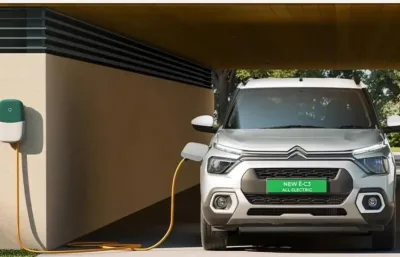
One of the biggest attractions for an electric car is its low running cost. Contrary to petrol and diesel cars that run on conventional fuels, electric vehicles do not use petrol and diesel. Rather, they consume electricity stored in the battery that can be charged at home, at work or at a public charging station.
However, the actual EV running cost in India depends on several factors, including the car's electricity consumption, battery size, charging method, electricity tariff and driving pattern. This guide explains how to calculate the electric car running cost, monthly charging expense, difference between EV and petrol running costs in India, and more
What Is the Running Cost of an EV?
The running cost of an EV is the money spent to use the car regularly. For an electric car, the largest day-to-day expense is usually charging electricity. A simple way to calculate the charging cost is:
EV running cost per km = Electricity used per km × Electricity price
Suppose an EV consumes 15 kWh per 100 km. That means: Electricity consumption = 0.15 kWh per km
Home electricity tariff = ₹8 per kWh
Basic energy cost = 0.15 × ₹8
Running cost = ₹1.20 per km
The actual amount drawn from the electricity supply can be higher because some energy is lost during charging. Therefore, it is better to include charging losses when calculating the real cost. The Government's e-AMRIT portal also provides a home-charging calculator based on battery capacity, electricity tariff, range, charger power and conventional vehicle mileage.
Cost to Charge an Electric Car at Home vs Public Charging
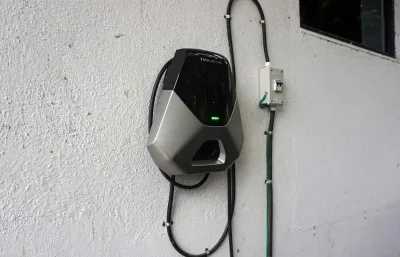
The place where you charge your electric vehicle has a significant effect on the cost of ownership.
Home Charging
Home charging is generally the most cost-effective option for day-to-day driving as you will pay the applicable domestic tariff for the electricity consumed. The Ministry of Power allows EV owners to charge their vehicles at their residences over the existing electricity connections. Assuming an EV efficiency of 15kWh per 100 km, an electricity tariff of ₹8 per kWh and a loss of around 10% during charging (assumption), the effective electricity consumption for every 100 km in case of home charging would be:
15 × 1.1 = 16.5 kWh
Electricity cost would thus be 16.5 × 8 ÷ 100 = ₹1.32 per km. This implies that for every 1,000 km driven, one would need to spend around ₹1,320 on electricity in this example. Your numbers may vary depending on your electricity slab and state.
Public Charging
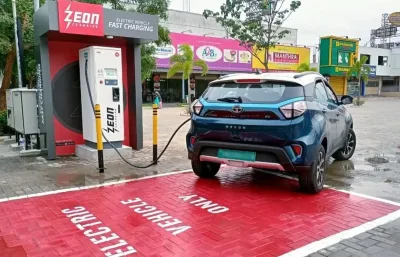
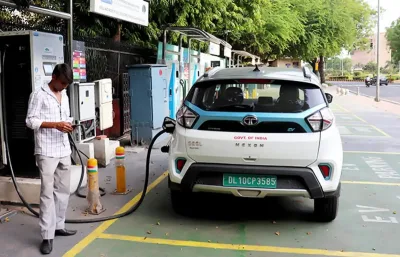
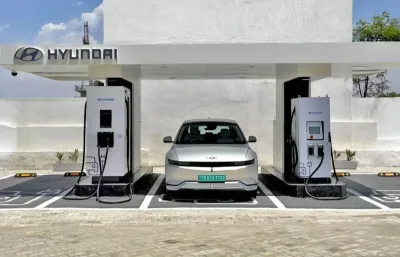
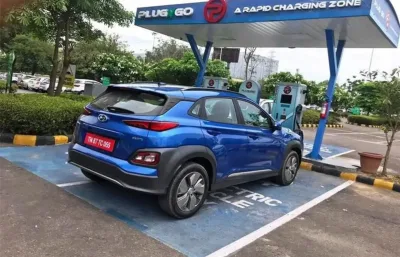
Public charging can be more expensive than home charging, but the price can vary between different charging operators and locations. The type of charger, speed, location, electricity tariff, service fees and applicable taxes can all influence the final amount. AC chargers are best suited for longer stops, while DC fast chargers can add a considerable amount of range in a much shorter time.
However, DC charging can be more expensive, depending on the charging operator and their tariffs. Therefore, EV owners with access to home charging can use it for their daily commute and use public charging for longer trips, emergency charging or when home charging is not available.
What Is the Typical EV Running Cost Per Km in India?
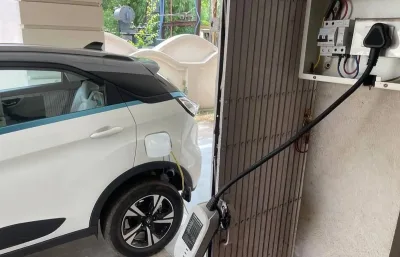
There is no single EV running cost per km for all electric cars. Efficiency differs between models, while electricity tariffs differ between states and households. A practical example can make the calculation easier.
| Vehicle type | Example efficiency | Energy/fuel price | Approx. cost per km |
| Electric car | 15 kWh/100 km | ₹8/kWh + charging losses | ₹1.30–₹1.50 |
| Electric car | 18 kWh/100 km | ₹8/kWh + charging losses | ₹1.50–₹1.60 |
| Electric car | 20 kWh/100 km | ₹8/kWh + charging losses | ₹1.70–₹1.80 |
| Petrol car | 15 km/l | ₹102/litre | ₹6.81 |
| Petrol car | 18 km/l | ₹102/litre | ₹5.67 |
These figures are illustrative and assume an electricity tariff of ₹8 per kWh and 10% charging losses. Actual EV running costs can vary depending on the vehicle's efficiency, charging conditions, electricity tariff and driving pattern. Petrol costs can also vary by city and fuel prices.
Also check: Complete EV Maintenance Checklist 2026
How Much Does It Cost to Drive an EV Every Month?
Your monthly EV charging bill mainly depends on how far you drive. Using an example of an EV requiring around 16.5 kWh from the electricity supply for every 100 km, with electricity costing ₹8 per kWh:
| Monthly distance | Approx. electricity used | Approx. charging cost |
| 500 km | 82.5 kWh | ₹660 |
| 1,000 km | 165 kWh | ₹1,320 |
| 1,500 km | 247.5 kWh | ₹1,980 |
| 2,000 km | 330 kWh | ₹2,640 |
These are illustrative figures and do not include insurance, maintenance, parking, tolls or other ownership expenses.
Home Charger Installation Cost
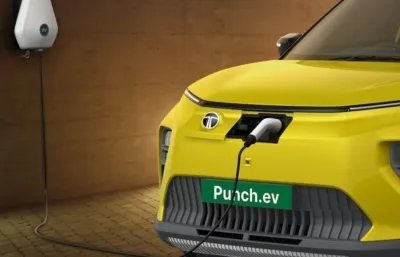
The cost of setting up home charging depends on the charger, electrical work, cable length, sanctioned load and installation requirements. Some EV manufacturers include a home charger and basic installation with the vehicle. For example, Tata.ev currently states that its home charger comes with complimentary installation, subject to its applicable terms. The final installation cost can increase if you need additional wiring, a longer cable run, electrical protection equipment, earthing work, load enhancement, civil work, a separate meter or connection.
The Ministry of Power also allows residential owners to use their existing electricity connection for EV charging or opt for a separate metered connection with a dedicated EV tariff. It is important to have the charger installed according to the manufacturer's requirements rather than using an unsuitable household socket for regular high-load charging.
EV Running Cost vs Petrol Car
The biggest difference between an EV and a petrol car is the cost of the energy used to travel. Let's take a simple example of 1,000 km on a monthly basis.
Electric car
If the electric car is costing you ₹1.40 per km,
then you would be spending 1,000 × ₹1.40 = ₹1,400 monthly on energy.
Petrol car
If the petrol car costs you ₹6.81 per km,
then you would be spending 1,000 × ₹6.81 = ₹6,810 monthly on energy.
That is a difference of roughly ₹5,410 on the energy front. Over a year, that would make a difference of around ₹64,920, assuming the same mileage and prices throughout the year. In reality, petrol prices, electricity tariffs, traffic conditions, your driving style and vehicle efficiency may vary from month to month. EVs are also more efficient than conventional petrol vehicles.
Also check: EV vs Petrol vs Diesel 2026: 5-Year Total Cost of Ownership in India
How to Reduce EV Running Cost?
There are several simple ways to keep your electric car running cost low.
Charge at Home Whenever Possible
Home charging is generally cheaper than public charging. Use public chargers mainly for long journeys or when home charging is not available.
Charge During Suitable Hours
Some electricity tariffs and EV charging arrangements provide lower rates during specific periods. The Ministry of Power's EV charging framework provides incentives for charging during solar hours for public charging infrastructure. Check your local DISCOM's tariff before deciding when to charge.
Drive Smoothly
Aggressive acceleration and high-speed driving can increase electricity consumption. Smooth acceleration, moderate speeds and efficient use of regenerative braking can help improve real-world efficiency.
Maintain Correct Tyre Pressure
Under-inflated tyres increase rolling resistance and can reduce efficiency. Checking tyre pressure regularly is a simple way to avoid unnecessary energy consumption.
Use the Right Charging Strategy
There is no need to use a fast charger for every charging session. AC home charging is usually more suitable for overnight charging, while DC fast charging is more useful when you need to add range quickly.
Is an Electric Car Cheaper to Run in India?
An electric car tends to be cheaper to run than a comparable petrol car in India, when the majority of the car's charging is performed in its home. The savings are more noticeable for people who drive long distances every month. A person who drives 1,500–2,000 km monthly can save thousands of rupees on energy expenses compared to a petrol car. Nonetheless, the running and total cost are different concepts, but they both have their own importance. The total ownership cost contains numerous expenses, such as:
- Price of a car
- Financing or loan interests
- Insurance
- Electricity or fuel
- Maintenance and servicing
- Tyres
- Repairs
- Installation of home charger
- Depreciation
- Resale value
An EV tends to have a higher purchase price than a comparable petrol car, so reduced running costs do not necessarily mean that the owner will always spend less money on the car from the beginning.
The best approach to evaluate the cost of an EV is to consider how many kilometres you drive every year and how much of your charging can be done in your home. It is more attractive for high-mileage owners due to low energy and potentially low maintenance.
Also check: Truth About Owning an EV in 2026 | Cost & Battery Life
Conclusion
The EV running cost in India can be substantially less than the running cost of a petrol car. For a typical electric car, which consumes 15–20 kWh per 100 km, home charging can provide an illustrative energy cost of roughly ₹1.30 --₹1.80 per km, depending on the electricity tariff and charging losses. In contrast, a petrol car, which provides 15 km/l has a running cost of about ₹6.81 per km at a petrol price of ₹102 per litre. The actual savings depend on the car, electricity tariff, method of charging and monthly driving distance. For the majority of private EV owners, home charging is the key to achieve a low running cost.